
Newsom’s Death Row Decision Sparks OUTRAGE
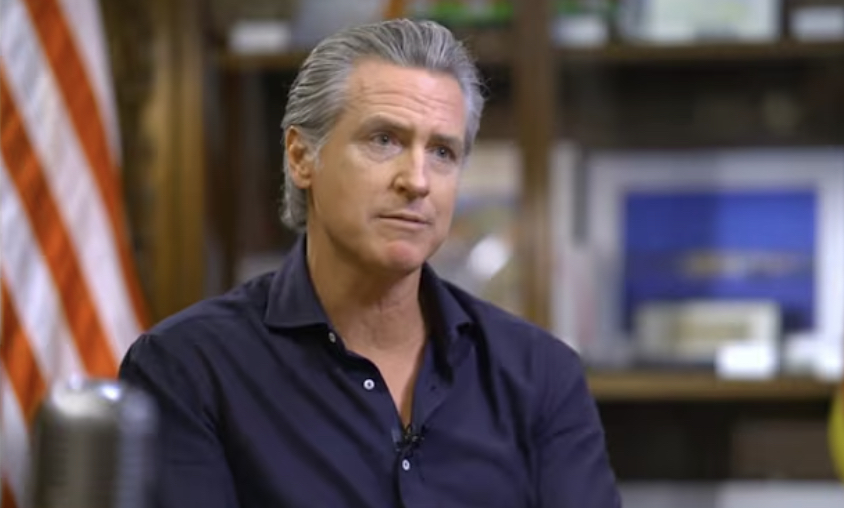
California Governor Gavin Newsom announced that he is commuting every death sentence in the state to life in prison without the possibility of parole. The action covers 548 inmates and represents the largest mass commutation of capital sentences in U.S. history according to advocacy organizations tracking the issue.
Newsom stated that state-sanctioned killing is incompatible with California’s values and undermines the foundations of the legal system. He has opposed executions throughout his time in public office and imposed a formal moratorium shortly after taking office in 2019. The state’s last execution occurred in 2006.
The commutations are not automatic in every case. Roughly 382 involve individuals with more than one felony conviction and therefore require review and approval by the California Supreme Court. Four of the seven justices must sign off for those cases to proceed.
Victims’ family members and prosecutors have sharply criticized the decision. Marc Klaas, whose daughter Polly was murdered in 1993, described the move as giving the gift of life to people who took it from others. District attorneys across the state have warned that the action disregards jury verdicts and prior voter decisions.
Newsom’s office has emphasized that the death penalty remains on the books. The governor’s action applies only to current sentences and does not prevent prosecutors from seeking capital punishment in future cases. Voters previously rejected efforts to repeal the death penalty in statewide ballot measures.
The announcement arrived on the same day executions were scheduled or carried out in other states. California has maintained the largest death row population in the country for years. Moving the inmates to general population has already occurred in many facilities after earlier policy changes.
Legal challenges are expected. Prosecutors have indicated they will contest the commutations in court, arguing that the governor’s authority does not extend to overriding the outcomes of capital trials in this manner. The process could take months or longer depending on how the state Supreme Court responds.
Newsom has said the decision was among the most difficult of his career. He consulted with corrections officials, judges, and some victims’ families before moving forward. He is leaving office in January and has not ruled out a future national campaign.
Supporters of the action argue that the death penalty system is expensive, error-prone, and inconsistently applied. They note that California has spent significant resources on capital cases without carrying out an execution in two decades. Opponents counter that the sentences reflected the will of juries and the severity of the crimes.
The inmates include individuals convicted of multiple murders, serial killings, and the deaths of children. The governor’s letter stated that the offenders can now die in obscurity while victims are remembered. That framing has drawn particular pushback from families who expected the original sentences to stand.
California’s death row population includes both men and women. The majority of the cases involve male defendants. Female inmates sentenced to death have already been housed in general population at other facilities under previous arrangements.
The cost of maintaining capital cases has been a recurring point of debate. Appeals and specialized housing contribute to higher per-inmate expenses compared with ordinary life sentences. Newsom’s office has pointed to those figures as part of the broader rationale.
Public opinion in California on the death penalty has shifted over time, yet ballot initiatives to abolish it have failed. The governor’s use of clemency power therefore operates within existing statutory and constitutional limits rather than eliminating the penalty outright. Future governors could theoretically take different approaches.
The announcement has drawn national attention because of its scale. No previous governor has moved to empty an entire death row in a single action of this size. Other states have issued smaller commutations in recent years, but none matched the number involved here.
District attorneys have stressed that they will continue to evaluate new cases on their individual merits. Some have already stated they will seek the death penalty where the facts and law support it. The practical effect on pending prosecutions remains limited for now.
The full legal resolution will depend on how the California Supreme Court handles the cases requiring its review. Until those determinations are made, the practical status of many sentences stays in a transitional phase. Families on both sides of the issue continue to follow the proceedings closely.
Join the Conversation
Keep Reading

Armed Man Arrested Near White House After Trump Threat



Trump Names New Chief of Staff


ICE Launches Major Operation in NYC

Kamala Harris Issues Chilling Demand
Major Democrat DEAD at 89

Meghan Markle’s Father ARRESTED

Top Trump Official Faces Impeachment
Share your perspective and reply to other readers.
Free account required. You will stay on this page.