JD Vance Lists FOUR Reasons Republicans Lost Voters
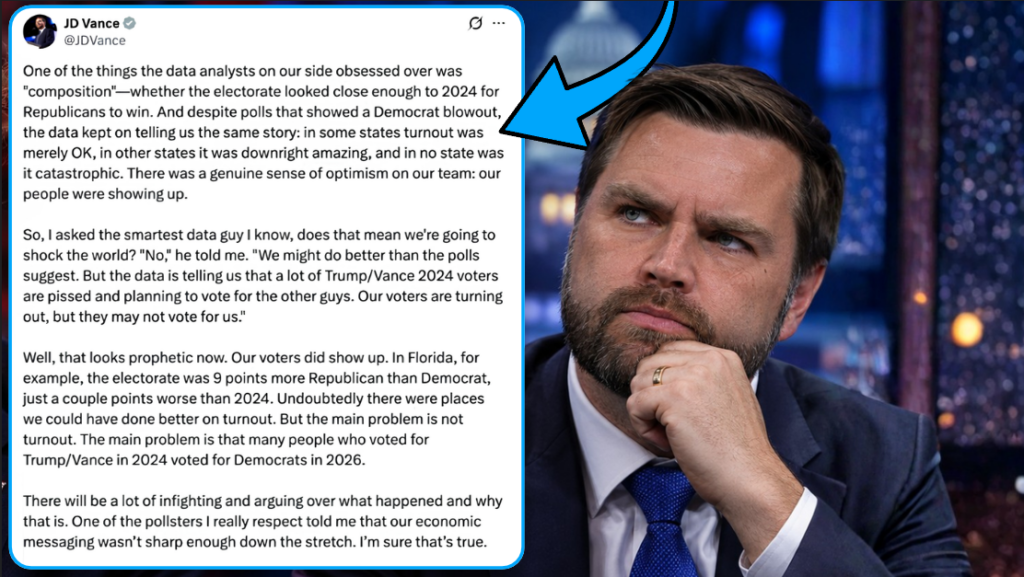
The GOP group chat is getting MESSY! JD Vance laid out FOUR reasons he believes Republicans lost voters, and now conservatives are arguing over his viral midterm post. Trump weighs in, Jonah Goldberg isn’t impressed, and Matt Walsh sees things differently. Mock and Daisy have some thoughts of their own!
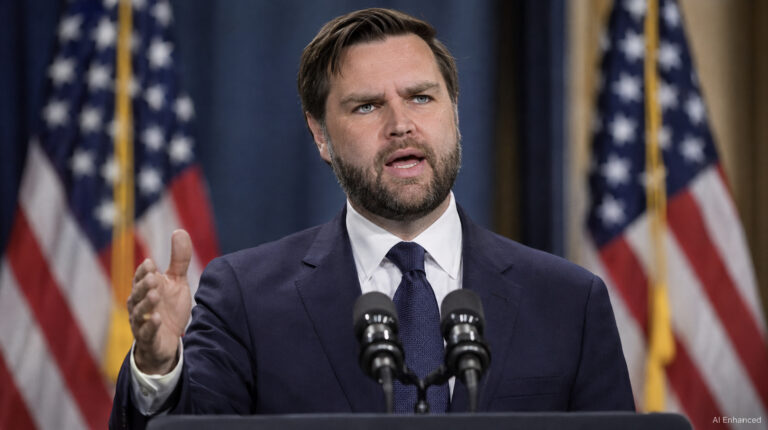
Background Info: Vice President JD Vance delivered a blunt assessment of the Republican Party’s devastating losses in the 2026 midterm elections, identifying four major issues that he believes drove former supporters of President Donald Trump into the Democratic column. In a lengthy statement posted to X on Wednesday, November 4, Vance argued that the GOP’s defeat was not primarily caused by weak Republican turnout but by voters who had supported Trump in 2024 and abandoned the party just two years later.
Vance said internal polling revealed widespread frustration among former Trump supporters, particularly over the ongoing war with Iran, rising living costs, American foreign policy priorities and the United States’ relationship with Israel. Democrats secured control of both chambers of Congress in Tuesday’s elections, dealing a major setback to Trump’s legislative agenda and raising questions about the Republican Party’s direction ahead of the 2028 presidential election.
The vice president identified four concerns that dominated responses from voters who had previously supported Republicans: ending the war, addressing inflation and the cost of living, putting America first, and changing America’s relationship with Israel. According to Vance, these issues accounted for nearly all the responses collected by a Republican pollster who questioned disaffected Trump voters about what would persuade them to return to the party.
Vance explained that Republican strategists had spent considerable time studying the composition of the electorate and comparing projected turnout with Trump’s successful 2024 campaign. However, he argued that focusing on turnout numbers obscured a more serious problem: Americans who had previously backed the Republican ticket were actively choosing Democratic candidates.
“The main problem is not turnout. The main problem is that many people who voted for Trump/Vance in 2024 voted for Democrats in 2026,” Vance wrote. He cited Florida as an example, noting that the state’s electorate remained heavily Republican despite the national Democratic wave.
The vice president said one trusted pollster had warned him before Election Day that Republicans were heading toward a substantial defeat. According to Vance, the pollster predicted that the party would lose the national generic congressional ballot by 13 percentage points, a forecast that surprised even the vice president, who acknowledged feeling pessimistic about the results.
The first and most significant concern involved the war with Iran, which has become an increasingly divisive issue within the Republican coalition. Although Trump has defended the military campaign as necessary for American national security, the prolonged conflict has generated opposition among voters who expected his administration to avoid additional foreign entanglements.
“The reason we lost is the war. The president himself said so last night,” Vance declared. The statement represented an unusually direct acknowledgment from a senior administration official that the White House’s foreign policy decisions had contributed to the Republican Party’s electoral losses.
The second concern involved inflation and the cost of living, issues that played a central role in Trump’s return to the White House in 2024. Despite administration efforts to emphasize economic accomplishments, many households continued to express frustration over everyday expenses, including groceries, housing, transportation and energy.
Vance acknowledged that Republican messaging on economic issues had fallen short. He said another political analyst had criticized the party’s economic communication during the final weeks of the campaign, an assessment the vice president considered reasonable even as he maintained that the war was the primary reason Republicans suffered such substantial losses.
The third concern centered on the administration’s commitment to putting America first, a defining principle of Trump’s political movement. Some voters who supported Trump’s earlier promises to prioritize domestic interests became increasingly skeptical of policies involving overseas military commitments, foreign spending and America’s involvement in international conflicts.
The fourth issue involved the United States’ relationship with Israel. Vance said voters specifically identified changing that relationship as a priority, highlighting growing divisions within conservative circles over American military support, foreign assistance and Washington’s role in Middle Eastern conflicts.
The comments were particularly notable because disagreements over Israel and Iran have increasingly complicated Republican foreign policy debates. While many traditional Republican lawmakers remain strong supporters of Israel, other conservatives have questioned whether continued American involvement in regional conflicts is compatible with Trump’s America First platform.
Vance also warned that Republican establishment figures might attempt to redirect attention toward immigration policy following the election. He rejected suggestions that the party should respond to its losses by embracing amnesty for illegal immigrants, arguing that such a shift would misinterpret the concerns expressed by voters who abandoned Republicans.
“Anyone pushing amnesty is lying to you,” Vance wrote. However, he acknowledged that immigration enforcement strategies could be reconsidered, including placing greater emphasis on businesses that employ workers who are in the country illegally. His remarks suggested that he believes Republicans should adjust certain enforcement priorities without abandoning their broader immigration commitments.
The vice president’s criticism also highlighted growing disagreements within the Trump administration’s political coalition. Trump acknowledged that Iran played a role in the election results but continued defending the military campaign. Meanwhile, Donald Trump Jr. publicly supported Vance’s assessment, sharing the vice president’s statement with an emphatic message of agreement.
The political implications extend beyond the immediate congressional defeats. Vance is widely considered a potential contender for the 2028 Republican presidential nomination, and his willingness to publicly identify disagreements with the administration’s direction could help distinguish his political priorities as Republicans debate how to rebuild their coalition.
Despite the losses, Vance concluded his statement by encouraging frustrated conservatives to remain politically engaged rather than abandon the Republican Party. He urged voters dissatisfied with the election results to support candidates who share their views, arguing that the GOP’s recovery must begin with an acknowledgment of why previously loyal Trump supporters turned against the party.
Join the Conversation
Keep Reading
Meghan Markle’s Father ARRESTED

Top Trump Official Faces Impeachment

Top Democrat Faces Revolt From Own Party
Dems Reveal Their First Act in Power — It’s BAD
JD Vance Makes Major Political Move


Country Music Star Dead at 35
Share your perspective and reply to other readers.
Free account required. You will stay on this page.