Joe Rogan Sounds Alarm Over Christianity
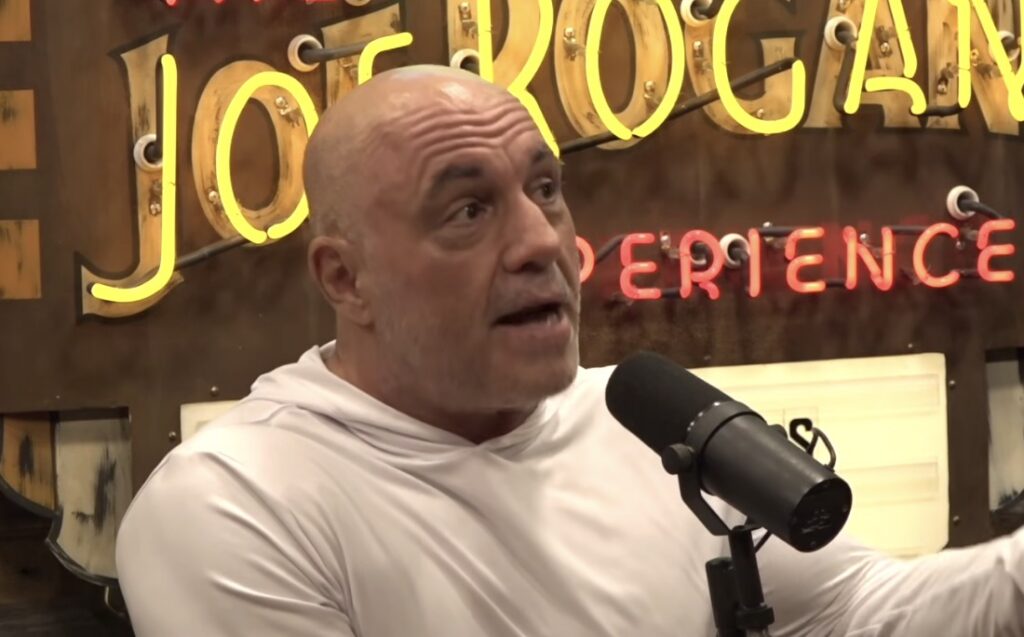
Podcaster Joe Rogan argued that progressive ideology has replaced religion for many on the left and that some are introducing those political views into Christianity. Speaking on his podcast, he said the left is “much more loony” than the right in part because a large portion has embraced secularism.
“Like when you think about the left, you generally don’t think about like Christianity or any religion really. It’s more of like a science-based like, ‘We’re too smart for that thing.’ And I think they’re just lost,” Rogan said. “There’s no moral scaffolding to hold on to.”
He described shared codes such as the Ten Commandments and humility toward a higher power as beneficial for society. For many liberals, he said, far-left political ideology has become a substitute religion, to the point that some attempt to insert those beliefs into traditional Christianity.
Rogan pointed to a “larger than normal presence” of LGBT pastors promoting “a very different Christianity.” He quoted the reaction of biblical scholars: “Hey, wait, what page is this on? What? Where does it say abortion’s OK? Like, how are you getting to that? Where does it say God’s non-binary?”
He called the development “woke weirdness that sort of entered into religion” and questioned whether it is beneficial. “Because you’re not following the original stuff,” Rogan said. He suggested that if any biblical passages require modern re-examination, those concerning slavery and genocidal warfare should come before questions about God’s gender identity.
His guest, Francis Foster of Triggernometry, agreed. Foster contrasted a traditional Catholic upbringing with more modernized services and said that if one is religious, “you want the real deal.” Rogan replied, “You want to hear the Latin!” Foster added that genuine religion includes moral consequences: “You want to sit there and think to yourself, ‘F***, I’m going to hell, and it’s going to be awful.’”
Bishop Robert Barron, founder of Word on Fire and Bishop of Winona-Rochester, told Fox News Digital he largely agreed with the substance of Rogan’s comments. “For the past several decades, various forms of liberal Christianity have compromised the doctrinal content of the faith, first turning the great dogmas into vague symbols and subsequently evacuating them completely in favor of the progressive political agenda,” Barron said.
Barron proposed a test: whether someone can “honestly and with enthusiasm subscribe to the Apostles’ Creed.” He asked whether the person believes in God, the divinity of Jesus, the power of the Holy Spirit, and the objective truth of the Resurrection. “If not, he is using classical Christianity as a smokescreen.”
Rogan’s remarks focused on the absence of traditional moral structure among secular progressives and the subsequent effort by some to adapt Christian institutions to contemporary political priorities. He distinguished between historical biblical topics that might warrant discussion and newer claims about identity that he said lack scriptural basis.
The conversation touched on the social utility of shared religious codes. Rogan argued that humility before a higher power provides scaffolding that secular ideology does not replace.
Foster’s comparison of traditional and modernized worship illustrated the point about authenticity. Both speakers suggested that a faith stripped of its original demands loses its distinct character.
Barron’s response supplied a theological counterpoint, emphasizing continuity with historic creeds over adaptation to current political agendas. He framed the issue as one of doctrinal integrity rather than mere cultural preference.
The exchange highlighted differing views on whether Christianity can absorb progressive positions on gender, abortion, and related topics without altering its foundational claims. Rogan positioned the trend as a departure from “the original stuff.”
Listeners of the podcast heard Rogan contrast the left’s general secularism with the right’s more frequent association with traditional religion. He presented the injection of political ideology into churches as an extension of that secular turn.
The discussion remained centered on the relationship between progressive politics and Christian teaching rather than on any single denomination or pastor. Rogan’s core claim was that the left has lost a moral framework and is attempting to fill the gap by reshaping existing religious institutions.
Join the Conversation
Keep Reading

Country Music Star Dead at 35


Stock Market Takes New Turn After Decisive Midterm
Trump Breaks Silence After Election Disaster
MLB Legend Wins House Race
Democrat Mocks Trump in Victory Speech
Share your perspective and reply to other readers.
Free account required. You will stay on this page.