
Ilhan Omar Sends Chilling Arabic Message
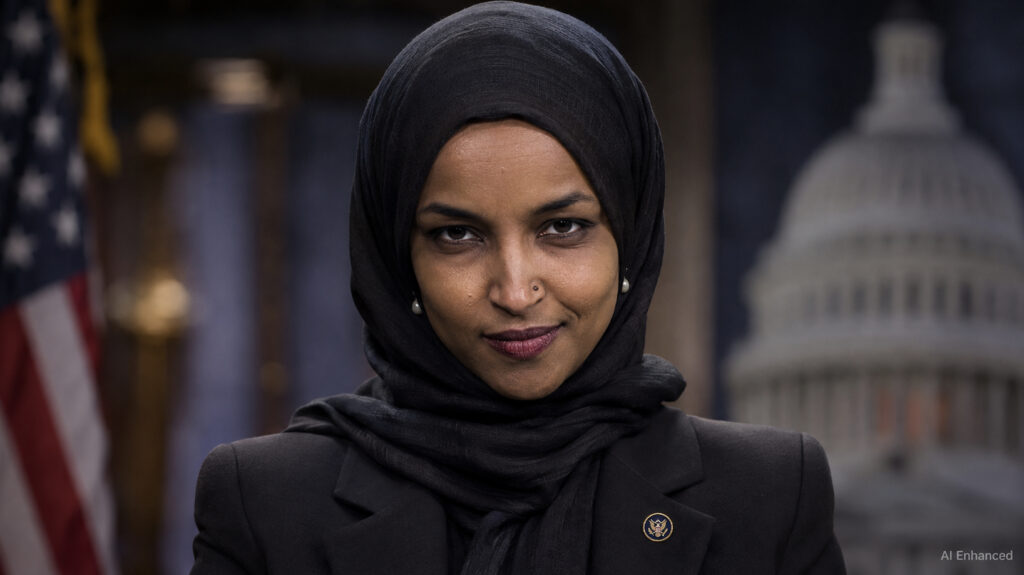
Rep. Ilhan Omar posted a message on X congratulating Michigan Democrat Abdul El-Sayed after his projected victory in the U.S. Senate race. The Minnesota congresswoman celebrated the outcome as a significant moment for Muslim political representation in the United States, drawing attention not only to El-Sayed’s electoral success but also to the growing number of Muslim lawmakers serving in Washington.
Omar, a Muslim immigrant representing Minnesota, framed the result in explicitly religious terms. Rather than focusing primarily on the Democratic Party’s electoral gains or the policy implications of the Senate race, her message emphasized the religious identity she shares with El-Sayed. The celebration quickly became a subject of political debate, with critics questioning the emphasis on religious representation in a federal institution intended to serve Americans of all backgrounds.
- 🔥 Top Story: Majority Of Voters Cited Major Issue In Midterm Elections
- Most Viewed: FBI Arrests Suspect in Election Threat Scare
- Most Commented: Democrat Mocks Trump in Victory Speech
- Photos: Sexy Conservative Babe of the Day — Nov 5
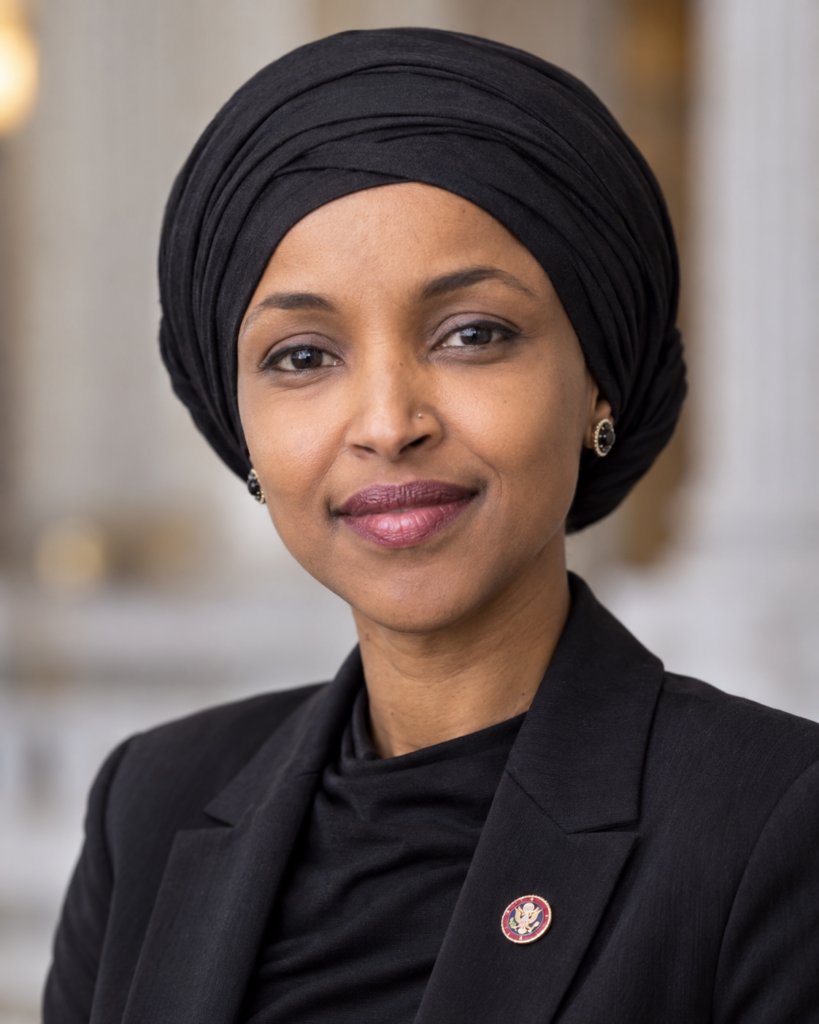
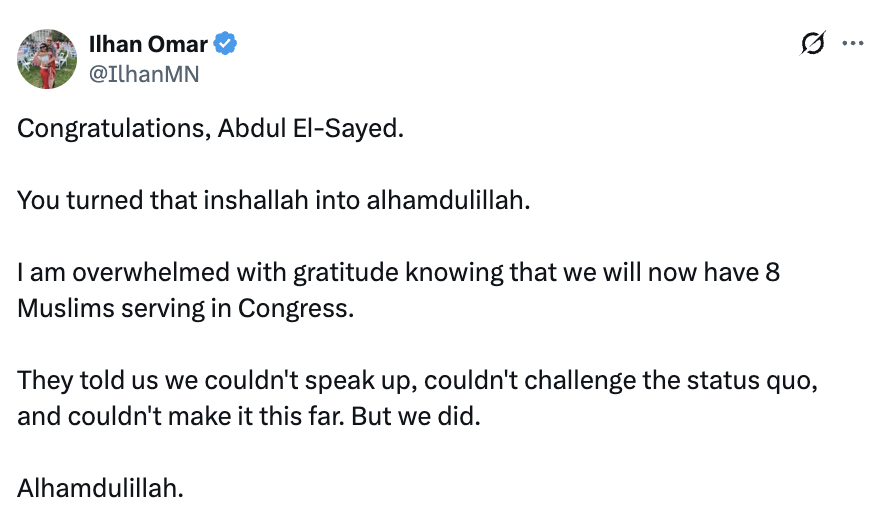
She wrote: “Congratulations, Abdul El-Sayed. You turned that inshallah into alhamdulillah.” The message referenced an expression El-Sayed had previously used when discussing his political aspirations, portraying his projected victory as the fulfillment of a goal that had once remained uncertain. Her choice of words also connected the election result to a broader narrative of perseverance and political advancement.
The post continued: “I am overwhelmed with gratitude knowing that we will now have 8 Muslims serving in Congress.” Omar’s statement placed El-Sayed’s projected victory within the larger context of Muslim representation in American politics. Her reference to eight Muslim lawmakers became a central point of discussion, particularly among conservative commentators who interpreted the numerical emphasis as an unusually direct celebration of religious identity in government.
“They told us we couldn’t speak up, couldn’t challenge the status quo, and couldn’t make it this far. But we did. Alhamdulillah.” The statement suggested that Omar viewed the election as more than an individual candidate’s political achievement. It presented the outcome as a collective milestone for a community that she believes has faced significant obstacles in gaining influence and representation within American political institutions.
Inshallah means “God willing” and alhamdulillah means “praise be to God.” Both expressions are common in Arabic and are frequently used by Muslims in everyday conversation, although their usage is not exclusively religious or limited to Muslims. In the context of Omar’s remarks, the transition between the two phrases conveyed a movement from hope and uncertainty to gratitude following an anticipated outcome. Their inclusion in the public celebration also became a focal point for observers examining how religious language is used by elected officials.
The phrasing echoed language El-Sayed used in his own victory remarks. His speech similarly incorporated religious expressions while reflecting on the significance of the election, reinforcing the connection between his personal identity and political success. The similarities between the two messages attracted attention because both prominent Democrats chose to highlight their shared faith during a major electoral moment, adding another dimension to the debate surrounding the outcome.
During the speech, El-Sayed stated: “My name is Abdulrahman Mohamed El-Sayed.”
He added that he had previously said “inshallah” when discussing the race outcome, but “today, tonight, we can turn that inshallah into alhamdulillah.”
Omar’s post drew immediate criticism from observers who viewed it as highlighting religious identity over American civic norms.
Sarah Raviani, an Iranian-American activist, wrote that a similar celebration by Christian Republicans would have produced a different reaction.
“Imagine the meltdown if Christian members of Congress celebrated an election by announcing how many Christians they now had in government,” she said.
Conservative writers described the exchange as an overt signal of a growing Muslim presence in Congress.
Rusty Weiss of RedState called it “obvious flaunting” intended to convey that a particular political outlook was advancing.
Omar later restricted replies to the post.
The message arrived on the same night El-Sayed’s supporters were captured chanting “Free, free Palestine” outside his victory event.
Critics argued the sequence of statements and celebrations moved beyond standard election night language.
Omar has previously addressed supporters in Somali at her own events.
The posts and speeches prompted renewed discussion about the role of religious identity in congressional representation.
Join the Conversation
Keep Reading
Dems Reveal Their First Act in Power — It’s BAD
JD Vance Makes Major Political Move


Country Music Star Dead at 35

Stock Market Takes New Turn After Decisive Midterm

Trump Breaks Silence After Election Disaster
Share your perspective and reply to other readers.
Free account required. You will stay on this page.