
DeSantis Just Said What a LOT of Frustrated Republican Voters Are Thinking!
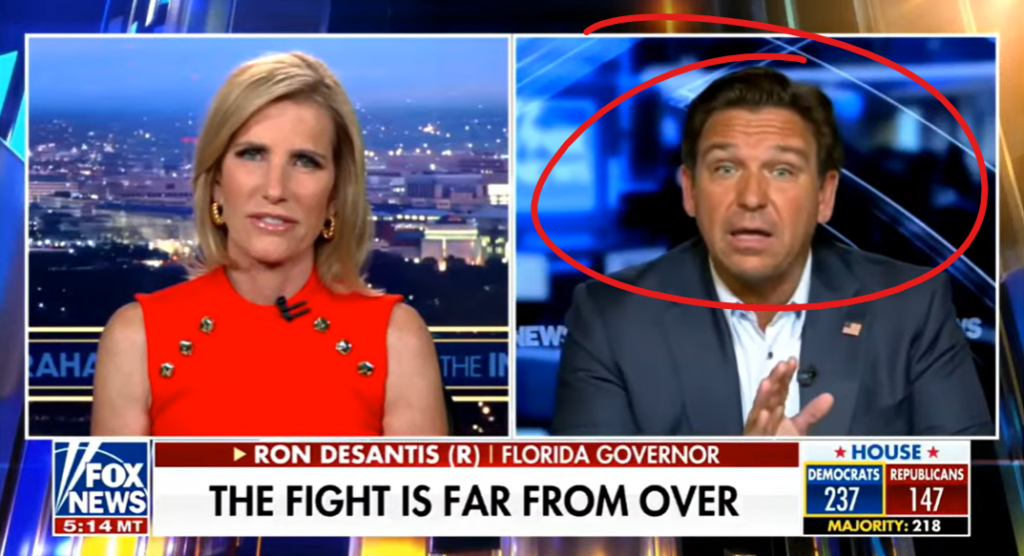
Y’all, Ron DeSantis is NOT holding back! 👀 The Florida governor is warning Republicans about an “extinction-level event” after the midterms, and he’s got some WORDS for the do-nothing Republicans in the Senate. From his hilarious broccoli-versus-ice-cream analogy to his thoughts on a possible 2028 presidential run, there’s a LOT to unpack. Mock and Daisy break it all down and ask whether the GOP is actually listening to its frustrated voters!
Background Info: Florida Gov. Ron DeSantis issued a blistering assessment of the Republican Party following its devastating losses in the 2026 midterm elections, warning that the GOP faces potentially years of political consequences. During a Wednesday appearance on Fox News’ The Ingraham Angle, DeSantis criticized congressional Republicans for failing to deliver on major conservative priorities despite controlling Washington during President Donald Trump’s second term.
The governor’s remarks came after Democrats captured control of both the House and Senate in Tuesday’s elections, dealing Republicans significant defeats across several traditionally conservative states. DeSantis described the national results as “close to an extinction-level event” for Republicans, arguing that the party’s failures could reshape American politics well beyond the next election cycle.
Speaking with Fox News host Laura Ingraham, DeSantis argued that Republicans had squandered opportunities to enact meaningful legislation while they possessed congressional majorities. He blamed the party’s disappointing performance partly on frustrated conservative voters who believed elected officials had failed to fulfill promises made during previous campaigns.
The Florida governor was particularly critical of Republican senators, questioning why lawmakers had not pursued more aggressive immigration legislation. He cited the failure to codify Trump’s immigration executive orders, restrict H-1B visas and make other changes to federal immigration law as examples of missed opportunities.
DeSantis argued that Republican lawmakers frequently blamed Senate procedural obstacles for their inability to advance conservative legislation. However, he questioned whether enough Republican senators genuinely supported the sweeping policy changes they had promised voters, even if legislative rules had been more favorable.
The governor also criticized the party’s broader legislative priorities, suggesting Republicans had failed to demonstrate the urgency necessary to capitalize on their political advantage. His comments reflected a growing dispute among conservatives over whether Republican leaders had adequately pursued the agenda that helped return Trump to the White House in 2024.
DeSantis acknowledged that the election represented a rejection of both the president and congressional Republicans. He argued that Democrats and independent voters had turned against the administration, while some Republicans either crossed party lines or refused to participate in the election altogether. He specifically blamed dissatisfaction with congressional productivity for discouraging conservative turnout.
Earlier Wednesday, DeSantis delivered an equally grim assessment during a news conference in Florida. He compared the Democratic victories to a political meteor strike that had swept through states traditionally considered safe Republican territory. The governor warned that the consequences could extend into several future election cycles.
Texas became a central example in his criticism. Republicans suffered major defeats in statewide races, including the governor’s contest and a closely watched U.S. Senate election. DeSantis argued that losing ground in Texas, historically one of the Republican Party’s strongest states, threatened the GOP’s long-term ability to compete nationally.
Florida, however, offered Republicans a notable exception to the nationwide Democratic victories. Republican Rep. Byron Donalds won the race to succeed DeSantis as governor, while Republican Sen. Ashley Moody also secured victory. DeSantis credited Florida’s conservative governing record and established relationships with voters for helping Republican candidates withstand the national political environment.
During his Fox News interview, DeSantis acknowledged that Florida had experienced its own shift toward Democrats. Nevertheless, he maintained that Republican candidates performed better because voters trusted the state’s leadership to deliver results. He also pointed to a successful property-tax ballot initiative as a factor that encouraged participation among Florida voters.
The governor’s criticism extended to the federal judiciary, where he warned that Republicans were running out of time to confirm conservative judicial nominees. With Democrats preparing to assume control of the Senate in January, DeSantis urged Republicans to use the remaining weeks of their majority to fill outstanding judicial vacancies.
DeSantis suggested that Senate Republicans should work around the clock before the new Congress convenes. He warned that Democratic control of the chamber would severely limit Trump’s ability to confirm conservative judges during the remainder of his presidency, potentially allowing vacancies to remain unfilled until a future administration.
The governor also rejected the idea that Democrats had received an overwhelming endorsement of their policy agenda. Instead, he characterized the election as primarily a rebuke of Republicans in Washington, arguing that dissatisfaction with the governing party had benefited Democratic candidates despite continuing public opposition to certain progressive policies.
DeSantis predicted that Republicans could struggle to regain congressional control in 2028, particularly given the Senate seats that will be contested in that election. He suggested that the party’s losses could prevent Republicans from exercising unified control of Washington for several years, even if the political environment improves before the next presidential election.
His unusually direct criticism has also intensified speculation about his political future. DeSantis, who unsuccessfully challenged Trump for the 2024 Republican presidential nomination, will leave the Florida governor’s office in January because of the state’s consecutive-term limits. He has not ruled out another presidential campaign in 2028, although he has not formally announced plans to run.
A potential DeSantis candidacy could place him in competition with Vice President JD Vance and other Republicans seeking to succeed Trump. Political observers have suggested that Florida’s ability to remain under Republican control could provide DeSantis with a compelling argument for his leadership, particularly if GOP voters begin demanding a different approach following the midterm defeats.
For Republicans, the central question is whether the party will respond to the election by changing its legislative priorities, leadership strategies and relationship with conservative voters. DeSantis has made clear that he believes the party’s problems extend beyond unfavorable election conditions, placing considerable responsibility on Republican officials who failed to deliver the results their supporters expected.
Join the Conversation
Keep Reading
Dems Reveal Their First Act in Power — It’s BAD

JD Vance Makes Major Political Move

Country Music Star Dead at 35
Stock Market Takes New Turn After Decisive Midterm
Trump Breaks Silence After Election Disaster
Share your perspective and reply to other readers.
Free account required. You will stay on this page.