
Supreme Court Sides with Trump Just Before Midterms, Ending Biden-era Deportation Rule
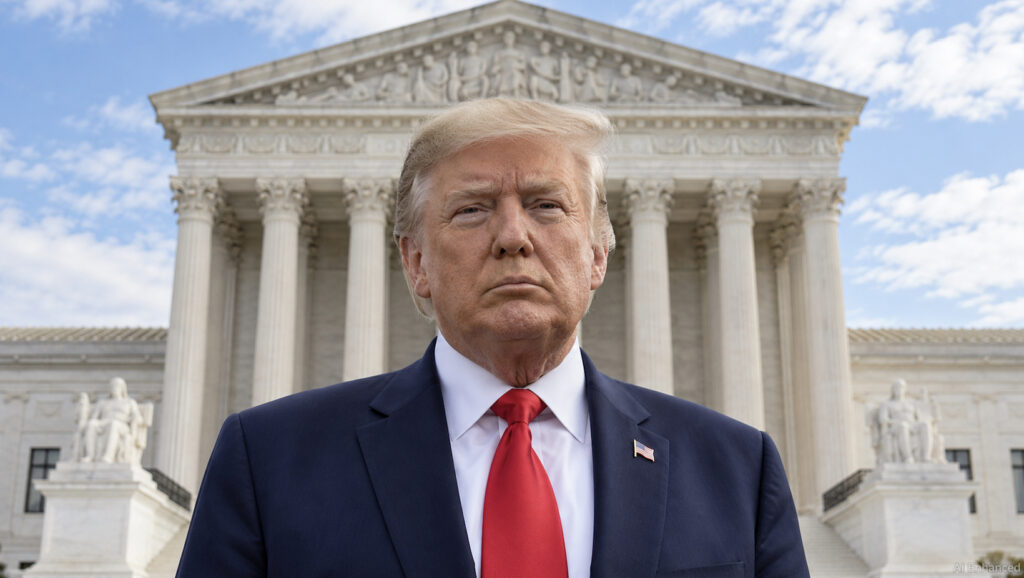
The U.S. Supreme Court has handed the Trump administration a significant victory in its effort to reverse Biden-era immigration policies, allowing a controversial rule governing deportation proceedings to be eliminated. The decision clears the way for an agreement between Texas and the Department of Justice to take effect, despite objections from several Democratic-led cities and an immigration advocacy organization.
The ruling, issued without any noted dissents, leaves intact a lower court decision striking down a 2024 Biden administration regulation. That policy had established procedures allowing immigration judges to temporarily suspend certain deportation cases while migrants pursued asylum applications or other forms of legal relief.
The practice, known as “administrative closure,” gave immigration judges a mechanism to remove cases from their active schedules without permanently dismissing them. Supporters argued that the procedure helped prevent unnecessary deportations while individuals pursued other available immigration protections.
Texas challenged the Biden administration’s regulation in June, arguing that federal officials had exceeded their legal authority when establishing the policy. The lawsuit became part of a broader dispute over the federal government’s handling of immigration enforcement and the limits of executive authority.
Following President Donald Trump’s return to office, the Justice Department sided with Texas and requested that the disputed regulation be invalidated.
Federal attorneys also sought to prevent similar regulations from being implemented in the future, creating an unusual situation in which both parties to the lawsuit supported eliminating the challenged policy.
U.S. District Judge Reed O’Connor, appointed by former President George W. Bush, approved the request on the same day it was submitted.
Critics accused Texas and the Justice Department of coordinating their legal strategy to dismantle the immigration protections without a traditional courtroom dispute.
The controversy intensified in August when Baltimore, Maryland; New Haven, Connecticut; and Columbus, Ohio, attempted to intervene in the proceedings.
The three cities joined forces with Centro Legal de la Raza, an immigration legal advocacy organization, to defend the Biden-era regulation and challenge the lower court’s decision.
Their attorneys argued that eliminating administrative closure could result in additional deportations of residents, potentially affecting local communities and reducing municipal tax revenues.
Judge O’Connor rejected their arguments, determining that the cities had not demonstrated sufficient grounds to intervene in the case.
On October 9, the municipalities and advocacy group appealed to the Supreme Court, requesting an emergency order to prevent the lower court’s judgment from taking effect while their legal challenge continued.
The challengers accused Texas and the federal government of “egregious collusion,” arguing that the agreement was designed to eliminate established immigration procedures.

The Justice Department disputed those claims and maintained that the opposing parties lacked legal standing because they had failed to establish the concrete harm necessary to pursue their challenge in federal court.
The Supreme Court ultimately declined to block the lower court’s decision, allowing the elimination of the Biden-era regulation to proceed.
“We are deeply disappointed that the Supreme Court declined to intervene to prevent the Trump-Vance administration from dismantling longstanding immigration court procedures through a backdoor agreement with Texas,” the cities and Centro Legal de la Raza said in a statement provided to Fox News Digital.
The organizations warned that the decision could particularly affect vulnerable immigrants, including abused children, survivors of violence and individuals cooperating with law enforcement. They argued that eliminating the procedure could increase deportation risks and undermine public safety. For the Trump administration, however, the ruling represents another significant step toward reversing immigration policies established under President Joe Biden.
Join the Conversation
1 Comment
Keep Reading







Smoking Gun Found in Ilhan Omar’s Own Memoir


CNN Issues Major Warning to Democrats Ahead of Midterms

Share your perspective and reply to other readers.
Free account required. You will stay on this page.