Jack Smith Caught Collecting Data on 639,000 Republicans
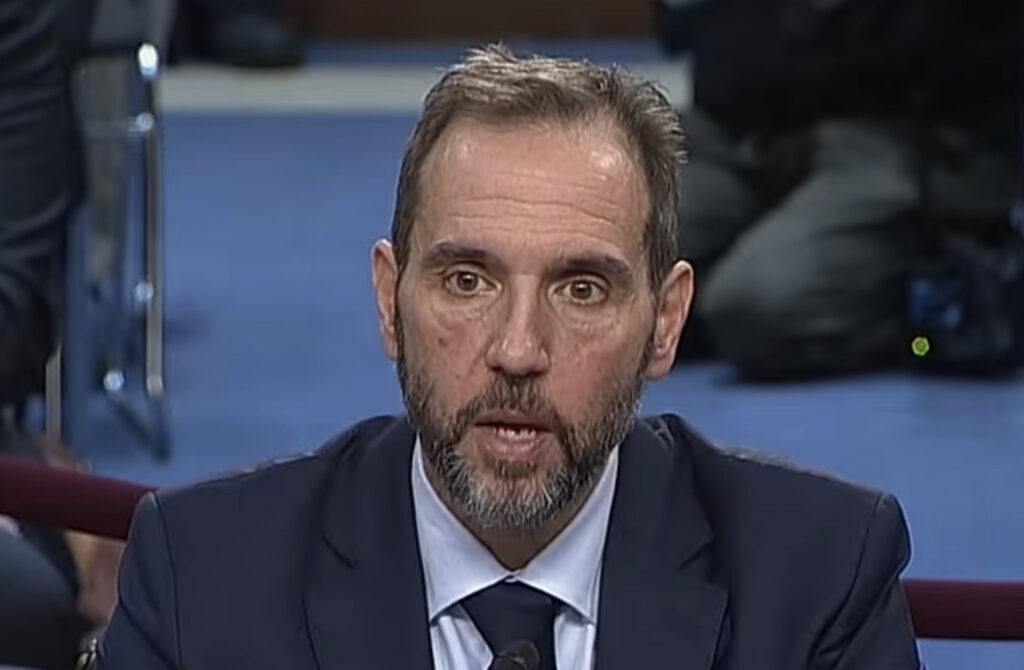
Former special counsel Jack Smith’s investigation collected extensive personal and financial information involving more than 639,000 Republican voters, donors, and supporters. The disclosure, announced by Senate Judiciary Committee Chairman Chuck Grassley, raises questions about the scope of the Biden-era Justice Department’s investigation into President Donald Trump and whether federal investigators obtained records beyond those necessary for their criminal inquiry.
The findings emerged from Grassley’s review of whistleblower disclosures and documents connected to the Arctic Frost investigation, which began in 2022. According to the senator’s memorandum, investigators obtained large spreadsheets containing names, addresses, political affiliations, employment details, donation histories, and financial information associated with Republican supporters across the country. Grassley argues that the collection extended far beyond the investigation’s intended purpose.
The records reportedly included information concerning at least 639,000 individuals, including more than 148,000 identified political donors. Many of those contributors made relatively small donations, with some giving as little as $1 and most contributing less than $1,000.
According to the memorandum, the collected information included dates of birth, residential addresses, email addresses, occupations, employers, congressional districts, and state legislative districts. Some records also identified individuals as registered Republicans.
Financial details were also included in the materials. These reportedly involved contribution amounts, credit card information, and donor classifications distinguishing between one-time contributors and individuals who made recurring political donations.
The answer is YES, @ChuckGrassley.
Jack Smith and his thugs attempted to obtain GOP donor data to intimidate small-dollar donors and get them to stop giving to President Trump and other candidates.
Smith and the J6 committee specifically wanted access to the 2020 campaign / RNC’s Salesforce account as well to go after people who may have given $5 at some point to Republicans.
Utterly ridiculous.
— Mike Hahn (@mikehahn_) September 29, 2026
The records covered political contributions and related information dating from 2005 through 2021. Grassley questioned why investigators obtained materials spanning such an extensive period when the inquiry concerned events surrounding the 2020 presidential election and its aftermath.
Investigators also reportedly collected purchase records involving merchandise associated with Trump’s political campaigns, including the recognizable red Make America Great Again hats.
Those records allegedly identified customers who purchased campaign merchandise and included shipping addresses associated with their orders. Other products referenced in the materials included shirts, coffee mugs, and doormats.
Grassley said the information was shared with FBI personnel involved in the investigation, raising additional questions about how extensively the records were distributed within federal law enforcement.
“This update shows that Jack Smith and the Biden Justice Department collected incredibly invasive donor data – and voter data – beyond what could conceivably be necessary for Smith or his team to fulfill the Special Counsel’s mandate,” Grassley wrote.
The Iowa Republican further accused investigators of attempting to examine the broader Republican political network rather than restricting their efforts to specific potential criminal activity.
“The new findings further corroborate that Smith and his partisan team aimed to map out the entire Republican Party apparatus,” Grassley stated.
Grassley also urged Democratic lawmakers to participate in his oversight efforts, accusing them of defending Smith instead of demanding greater accountability for the investigative methods used.
“I again call on my Democratic colleagues to join my oversight work instead of trying to defend Smith and sweep his abuse of authority under the rug,” he wrote.
The latest disclosure follows an earlier finding involving financial records associated with nearly 5,000 individuals who donated to Trump and Republican organizations aligned with him. Those contributors reportedly lived across all 50 states.
During a September 29 Senate Judiciary Committee hearing, Grassley questioned Smith about whether his investigative team had obtained financial records involving political donors. Smith acknowledged that prosecutors had collected such information.
“Yes. We acquired financial information. As I sit here right now, I cannot recite to you every subpoena we issued,” Smith responded.
Smith defended the investigative decisions, explaining that prosecutors were examining potentially serious criminal conduct. “I can tell you why we issued subpoenas. And it was to conduct a criminal investigation of one of the most serious crimes that’s ever happened in our nation’s history. I had a duty to collect facts,” he said.
Grassley’s oversight investigation has also examined the collection of telephone records and communications involving members of Congress. The latest findings add to the dispute over the scope of Smith’s investigation and the handling of sensitive political information. However, the reported acquisition of financial records through investigative subpoenas does not, by itself, establish that the information was stolen, publicly exposed, or obtained illegally.
Join the Conversation
Keep Reading


Ilhan Omar’s Family Subpoenaed by DOJ Amid Federal Investigation
Gunman Opens Fire On News Station


Ilhan Omar’s Explosive Wealth Scandal Exposed

Woke’ Judge Screams at Trump Lawyers in Courtroom Meltdown
Fox News Star Breaks Silence On Career Plans

Share your perspective and reply to other readers.
Free account required. You will stay on this page.