
First Results of 2026 Midterms — GOP Records Early Victory

The first results of the 2026 midterm elections are emerging, with Republicans recording an early gubernatorial pickup in Guam and a small New Hampshire community reporting an apparent advantage for the GOP in a closely watched Senate contest. The results will soon determine control of Congress, dozens of governorships, and the political direction of the country during the final two years of President Donald Trump’s second term.
- 🔥 Top Story: Trump Sounds Alarm on Election Scandal
- Most Viewed: Dead People Found on Voter Rolls
- Most Commented: Top Democrat Betrays Own Party Before Midterms
One of the earliest significant developments came from Guam, where Republican Vicente “Tony” Ada and running mate E.J. Calvo defeated the Democratic ticket of Therese Terlaje and Sabina Perez in the territory’s final unofficial count. Ada received 15,945 votes, approximately 51.45%, compared with 14,925 votes, or 48.15%, for Terlaje. The vote margin represents a Republican pickup after eight years of Democratic control of the governor’s office.
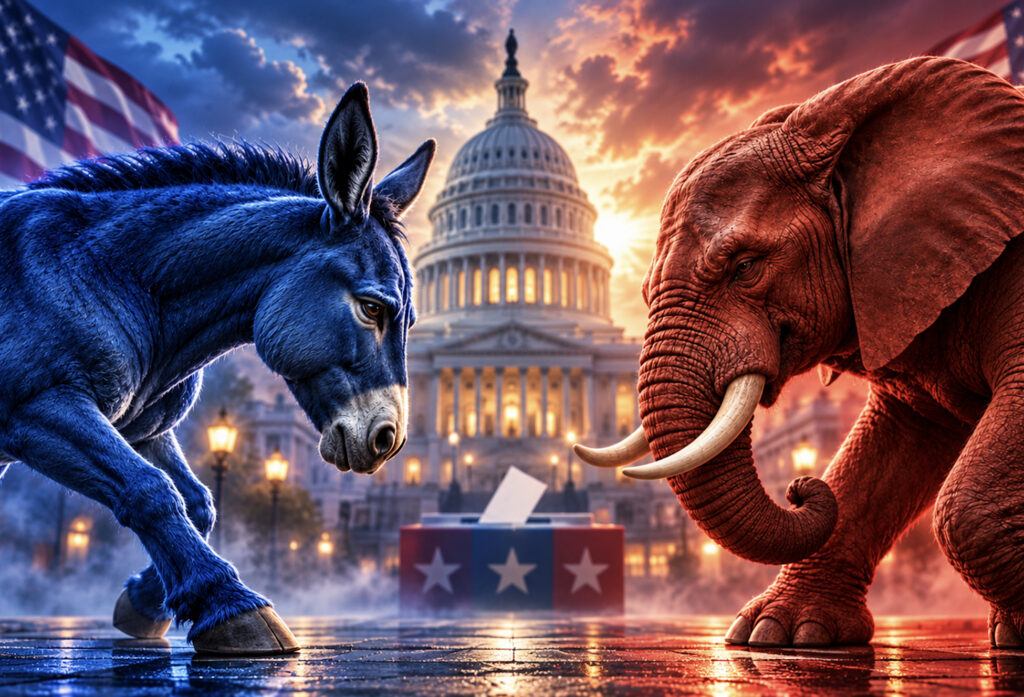
The Guam outcome attracted attention from Trump, who congratulated Ada and celebrated the early Republican success. However, the territory’s results do not necessarily predict how voters will behave across the mainland United States. Guam also appeared to deliver a Democratic pickup in its nonvoting U.S. House delegate race, demonstrating that the earliest election returns have produced gains for both parties.
Meanwhile, preliminary figures circulating from Dixville Notch, New Hampshire, suggested Republican Senate candidate John E. Sununu received five votes against two for Democratic Rep. Chris Pappas. The reported 71% to 29% margin came from just seven ballots and had not been independently verified through an official local report. The count reflects only that tiny community, and neither candidate had been declared the statewide winner based on those figures.
Dixville Notch has developed a national reputation for its midnight voting tradition, frequently producing some of America’s first Election Day returns. Its unusual prominence means even a handful of ballots can generate considerable political attention. In the 2024 presidential election, the community divided its six votes evenly between Trump and then-Vice President Kamala Harris, making this year’s reported Republican advantage particularly noteworthy, though statistically insignificant.
The New Hampshire Senate contest carries considerably greater importance than the early community tally suggests. Sununu, a former U.S. senator, is seeking to return to Washington by winning the seat being vacated by retiring Democratic Sen. Jeanne Shaheen. Pappas, who has represented New Hampshire’s 1st Congressional District since 2019, hopes to preserve Democratic control of the seat.
Republicans entered Election Day defending their congressional majorities, while Democrats sought enough victories to regain control of one or both chambers. All 435 voting seats in the House of Representatives are being contested, along with 35 Senate seats. Even relatively small changes in the partisan balance could determine whether Trump faces a supportive Congress or intensified opposition during the remainder of his presidency.
Among the most closely monitored Senate battles is Texas, where Republican Attorney General Ken Paxton is competing against Democratic state Rep. James Talarico. The race has drawn national attention because of its potential implications for the Senate majority and the political strength of both parties in a traditionally Republican state.
Michigan is another major battleground, with Trump-backed Republican Mike Rogers facing Democrat Abdul El-Sayed. The contest became especially contentious during the final campaign stretch after Democratic Rep. Haley Stevens, who lost her party’s Senate primary, endorsed Rogers. Her decision exposed divisions among Michigan Democrats and introduced additional uncertainty into an already competitive race.
Alaska’s Senate election has also generated controversy because two candidates with nearly identical names appear on the ballot. Republican incumbent Dan Sullivan faces Democratic candidate Mary Peltola, while another candidate named Daniel Sullivan has prompted allegations of deliberate voter confusion. Trump denounced the situation Tuesday, declaring, “It’s a total fraud. It’s a fraud on the voters. It’s a criminal act.” Those comments represent the president’s allegations, not an established judicial finding of election fraud.
Election officials in New York faced problems of a different kind after voting machines in Westchester County failed to accept paper ballots at multiple polling places. Officials attributed the problem to a programming issue and arranged for affected ballots to be securely preserved and counted. The malfunction became particularly significant because portions of Westchester fall within a competitive congressional district that could help determine House control.
Florida also experienced Election Day disruptions following severe flooding. Authorities moved polling locations in seven counties after Gov. Ron DeSantis authorized emergency adjustments. The affected areas included Brevard, Highlands, Indian River, Martin, Okeechobee, Palm Beach and St. Lucie counties. Officials directed voters to verify their polling locations before traveling.
Beyond Congress, Republicans are seeking victories in several high-profile gubernatorial contests. Florida’s race features Republican Byron Donalds against Democrat David Jolly, a former Republican congressman. In Ohio, Republican Vivek Ramaswamy is competing against Democrat Amy Acton. Both elections offer potential indicators of voter attitudes toward the president and his party.
The first major wave of mainland polling locations began closing at 6 p.m. Eastern in portions of Indiana and Kentucky. Additional states scheduled their closings throughout the evening, including several competitive jurisdictions at 7 p.m., 7:30 p.m. and 8 p.m. Larger battlegrounds, including Michigan, Texas and Wisconsin, were scheduled to finish voting later.
Election analysts caution that early leads can change substantially as additional counties and precincts report. Urban, suburban and rural communities frequently vote differently, while absentee ballots and in-person votes may be counted in different sequences. Consequently, an apparent advantage based on a limited number of returns does not necessarily establish which candidate will ultimately prevail.
The Associated Press and major television networks use dedicated election decision teams to evaluate incoming returns before announcing winners. Their analyses consider reported vote totals, historical voting patterns, outstanding ballots and whether the trailing candidate has a realistic opportunity to overcome the margin. These projections are distinct from the official certification process, which takes place afterward.
Voter participation has been another major development. More than 54 million Americans had reportedly cast early ballots before Election Day, exceeding the comparable 2022 midterm total by nearly nine million. The unusually high participation reflects the national importance of the contests, although early turnout figures alone cannot establish which party will benefit.
The central question now is whether the first Republican gubernatorial pickup in Guam will be followed by victories in competitive mainland states, or whether Democrats will secure enough gains to change the balance of power in Washington. The reported Dixville Notch figures offer an early point of interest, but the New Hampshire Senate contest and many other closely watched races require far more extensive counting before conclusions can be reached.
As Election Night progresses, attention will shift toward the first confirmed mainland victories, particularly in Senate and House battlegrounds. The Guam results provide an early Republican success, while other contests remain unresolved in the reporting verified for this update. With control of Congress at stake, the most consequential results are still ahead.
Join the Conversation
Keep Reading
President Trump Sounds Alarm on Election Scandal

Nearly 10,000 Dead People Found on Active Registered Voter Rolls

New Poll Stuns Democrats: Paxton Holds Narrow Edge Over Talarico

Top Democrat Turns on Own Party Just Before Midterm Elections

Anti-Trump Plant Allegedly Threatens Mass Violence

Democrat Arrested 12 Days Before Midterms



Share your perspective and reply to other readers.
Free account required. You will stay on this page.