
Security Experts Warn Islamist Pilots Pose ‘Insider Threat’
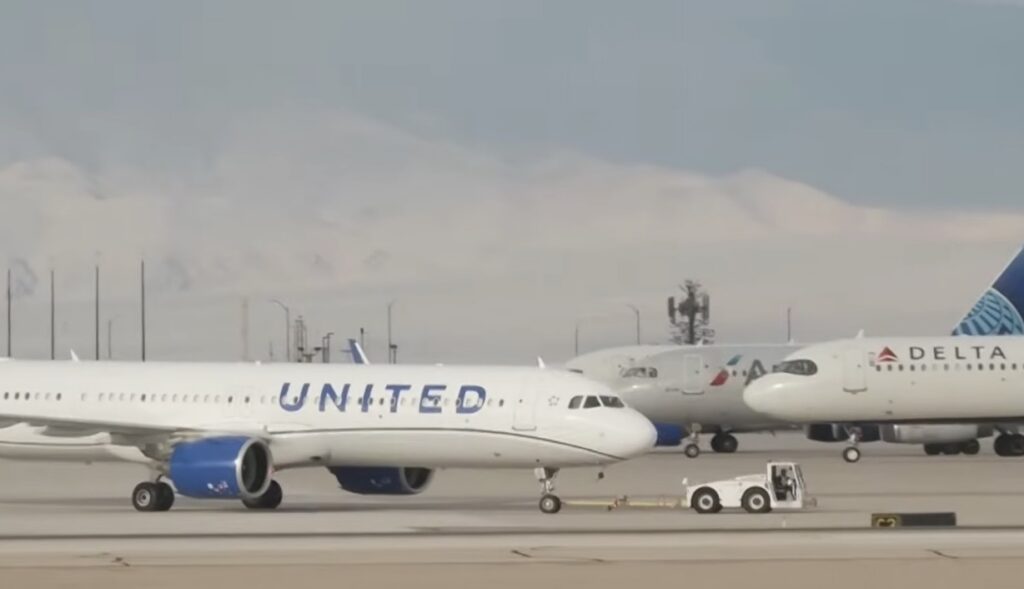
Security experts are warning that Islamist pilots present a potential insider threat to commercial aviation following a recent incident aboard a FlyDubai flight. In that case, a copilot who supported al-Qaeda attacked the captain with an ax in an attempt to crash the plane, but was stopped by the captain and passengers.
Former officials say the FAA should reassess cockpit security because new secondary barriers and jump-seat programs for air traffic controllers could increase risks if an extremist is already inside. Al-Qaeda has called for Islamist pilots to carry out similar attacks and to infiltrate the profession.
“Pilots who have openly espoused and supported terrorists should be grounded as unstable,” said aviation consultant Michael Boyd. He noted the difficulty of balancing free speech with safety concerns.
At least two U.S.-based pilots have been grounded or barred after social media posts praising terrorist groups came to light. One United Airlines pilot was suspended after posts supporting the October 7 Hamas attack; another was barred by Israel over expressed support for Hezbollah.
Retired FAA special agent Brian Sullivan described current vetting as a “major hole.” He said the agency and airlines do not systematically monitor social media for extremist views.
Historical cases include the 1999 EgyptAir Flight 990 crash, in which the first officer deliberately downed the plane while repeating a religious phrase, and the 2014 disappearance of Malaysia Airlines Flight 370, in which the captain is widely suspected of intentional action. Experts note that a disproportionate share of known pilot-orchestrated commercial crashes have involved Muslim pilots with extremist ties.
The FAA and Homeland Security state that pilots undergo mental-health evaluations, criminal background checks, and terrorist watchlist screening. They do not, however, review social media for ideological indicators.
The FlyDubai incident involved an Omani copilot who had previously been identified as a security risk by some authorities. Passengers gained access to the cockpit only because the captain unlocked the door before collapsing.
Al-Qaeda’s recent propaganda has explicitly encouraged copycat attacks by pilots. The group has reestablished training infrastructure in Afghanistan.
Experts argue that secondary cockpit barriers intended to keep threats out could instead trap an attacker inside with the controls. The new FAA program allowing controllers in the jump seat adds another person whose views are not pre-screened for extremism.
Airlines currently bear primary responsibility for identifying problematic pilots. Two recent U.S. cases show that social media flags can lead to action after the fact.
Sullivan and others say dismissing the pattern out of concern for profiling ignores documented incidents and explicit terrorist calls. They call for tighter review of publicly expressed support for terrorism.
No comprehensive public database tracks pilot-orchestrated crashes by ideology. Analysts say the available cases still show a clear concentration.
The agencies have not announced new screening protocols in response to the FlyDubai attack or the expert warnings. Existing checks remain the baseline.
Commercial aviation has long treated the cockpit as a hardened space after 9/11. The insider-threat scenario reverses that assumption.
Further incidents or additional social-media discoveries could prompt regulatory changes. For now, the warnings rest on recent events and historical patterns.
Airlines continue to operate under current rules while the debate over enhanced vetting continues.
Join the Conversation
Keep Reading
Former Obama CIA Director’s Son ARRESTED

Country Music Legend Given Just 1% Chance to Survive

Mike Pence Drops 2028 Bombshell

Supreme Court Justice Issues Warning



DeSantis Breaks Silence On 2028

BREAKING: Bomb Found In Illinois



GOP Lawmaker Drops Bomb on Ilhan Omar

Share your perspective and reply to other readers.
Free account required. You will stay on this page.