
Legendary Reagan-Appointed Federal Judge Dies
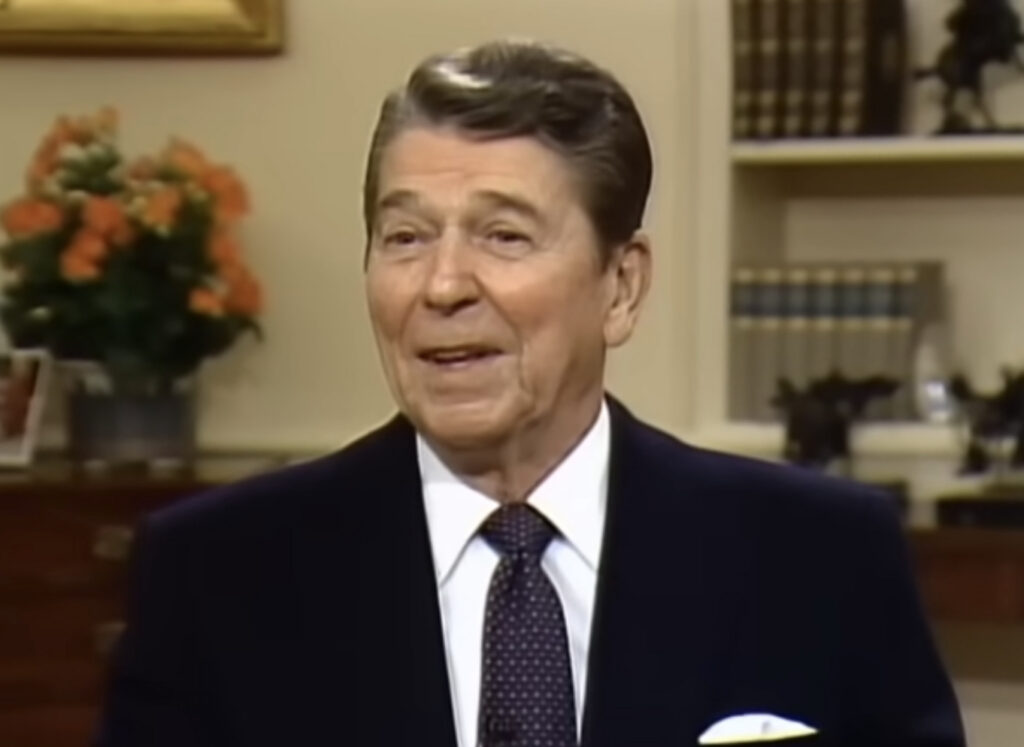
Richard A. Posner, the longtime judge on the U.S. Court of Appeals for the Seventh Circuit and one of the most-cited legal scholars of the late twentieth century, died Tuesday in Chicago at age 87. His son Eric confirmed the death. Posner served from 1981 until his retirement in 2017 and authored more than 3,000 judicial opinions.
Appointed by President Ronald Reagan at age 42, Posner became a leading figure in the law-and-economics movement. His 1973 book “Economic Analysis of Law” helped establish the field. He later wrote more than 50 books on topics ranging from antitrust and sex to the Clinton impeachment, the 2000 election, and national security after September 11.
Posner graduated first in his class from Harvard Law School at age 23 after entering Yale at 16. He clerked for Supreme Court Justice William J. Brennan Jr. and later served as an assistant to Solicitor General Thurgood Marshall. He joined the University of Chicago Law School faculty in 1969 and remained affiliated with the institution throughout his judicial career.
Colleagues described his writing as clear and his reasoning as pragmatic. He served as chief judge of the Seventh Circuit from 1993 to 2000. Occasional speculation about a Supreme Court nomination arose, though some of his more provocative applications of economic reasoning—such as market-based approaches to adoption—drew criticism and reduced his prospects.
Posner retired abruptly in September 2017, citing disagreements with colleagues over the treatment of self-represented litigants. He stated at the time that he was “proud to have promoted a pragmatic approach to judging” and that opinions should be easy to understand while focusing on right and wrong. Lawyers later disclosed that he received an Alzheimer’s diagnosis roughly six months after leaving the bench.
Born in New York City in 1939 to immigrant parents he once called “limousine radicals,” Posner produced a vast body of scholarship alongside his judicial work. He was frequently ranked among the most influential judges outside the Supreme Court. His opinions and articles continue to be cited across academic and professional literature.
The University of Chicago Law School announced the death. Tributes emphasized both the volume of his output and the distinctive voice he brought to legal analysis. No public details regarding services have been released.
Posner’s tenure spanned 36 years on the appellate bench. He wrote on subjects far beyond conventional case law, including literature and public policy. His retirement statement highlighted a career spent applying economic insights to legal problems.
Critics and admirers alike noted his willingness to challenge conventional doctrine. The “selling babies” example often cited by opponents illustrated the outer edge of his market-oriented thought experiments. Supporters credited him with forcing clearer thinking about incentives and consequences.
After retirement he remained active in commentary until health issues intervened. The Alzheimer’s diagnosis was disclosed in subsequent litigation involving his affairs. His son’s confirmation provided the official notice of death.
Posner’s early academic success and rapid rise to the bench marked an unusually compressed career path. The combination of judicial productivity and scholarly volume set him apart from most contemporaries. Citation studies consistently placed him at or near the top of late-twentieth-century legal scholars.
The Seventh Circuit handled a wide docket during his years as chief judge. His opinions were known for brevity and directness relative to many appellate writings. That style influenced generations of clerks and younger judges.
Reagan’s 1981 appointment placed Posner on the court at a relatively young age. He remained there through multiple presidential administrations. The decision to retire in 2017 ended one of the longest modern appellate tenures.
Further biographical details appear in the many profiles published during his active years. The announcement of his death has prompted renewed discussion of his contributions to law and economics. His written legacy remains extensive and widely available.
Join the Conversation
Keep Reading

ICE Wins Massive Case in Blow to Democrats


Deportee Accused of Storming Airplane Cockpit
Supreme Court STUNS Liberals, Clears Way for Border Wall



Major Ballot Drop Shifts Alaska Senate Race

Share your perspective and reply to other readers.
Free account required. You will stay on this page.