
Supreme Court STUNS Liberals, Clears Way for Border Wall
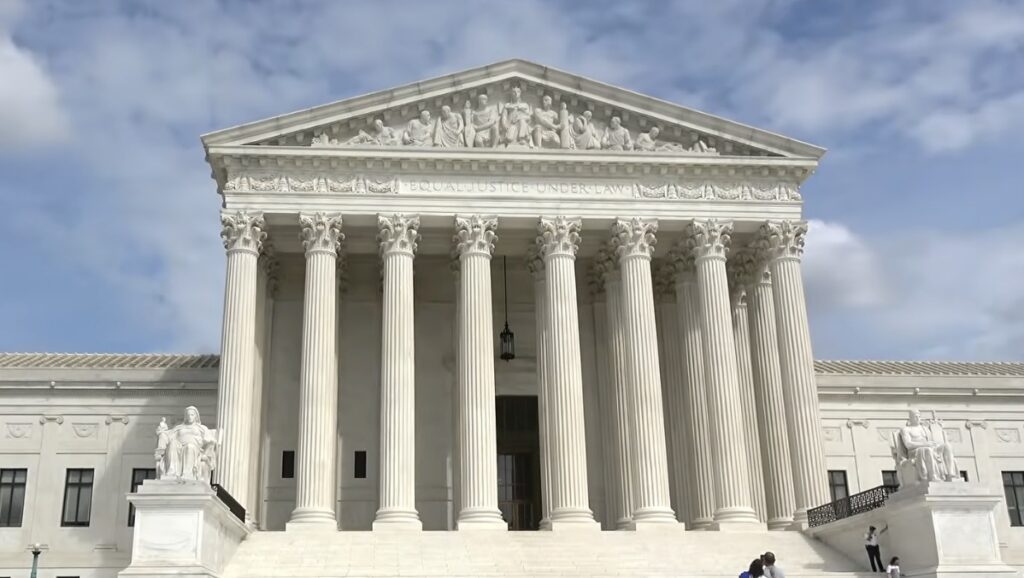
The U.S. Supreme Court on Monday granted the Trump administration’s emergency request to resume border-barrier work in the remote Big Bend sector of Texas while underlying litigation continues. An unsigned order stayed a federal district judge’s preliminary injunction that had halted construction-related activity across roughly 500 miles of the Rio Grande corridor, including areas in and near Big Bend National Park. Justice Ketanji Brown Jackson alone indicated she would have denied the stay.
Republicans in Congress appropriated $46 billion last summer for border infrastructure, and Customs and Border Protection has been advancing barriers at a pace of about 12 miles per week in other sectors. In Big Bend the agency’s plans include a mix of 30-foot steel bollard walls, vehicle barriers, and patrol roads rather than continuous pedestrian fencing inside the park itself. The government argued that even the lower-traffic sector still sees cartel activity and that delay undermines border security.
Environmental groups and local landowners had secured the lower-court order by contending that broad Department of Homeland Security waivers of environmental and other statutes exceeded statutory authority in an area with the southern border’s lowest apprehension rates. The district judge found Congress had not clearly authorized such sweeping exemptions for this landscape. The Supreme Court majority concluded that the injunction improperly interferes with the executive’s “compelling interests” in border security and that the equities favor allowing work to proceed during the appeal.
Opponents, including some Texas Republicans, have described the project as permanent alteration of one of the wildest stretches of the Rio Grande. One critic called the Court’s action “signing off on the permanent destruction of the wildest place in Texas.” Construction had already begun on an initial segment before the injunction; CBP has not publicly stated how quickly crews will remobilize.
The stay is temporary and does not resolve the merits. The case returns to the lower courts, where plaintiffs will continue to argue that the waivers violate statutory limits and that the project threatens unique ecosystems and historic sites. The administration has issued more than 30 environmental waivers in the past year and a half, a volume that exceeds roughly half the total issued in the agency’s prior history.
Local protests have featured signs reading “No Wall in the Big Bend Region” and “Don’t Tread on Texas.” Satellite imagery and ground photos show land-clearing activity near Santa Elena Canyon and other canyon lands. The Court’s brief order emphasizes that federal law gives the DHS secretary discretion to prioritize rapid barrier construction over the aesthetic and environmental harms alleged by respondents.
CBP’s long-term goal remains a layered system of physical barriers, technology, and roads spanning the full 2,000-mile southwest border. In Big Bend the immediate focus is on vehicle barriers and access roads rather than continuous high walls inside the national park. The decision aligns with earlier Supreme Court rulings that have limited judicial interference with border-security construction once Congress has funded it and the executive has invoked waiver authority.
Supporters argue the project deters illegal crossings and smuggling even in low-volume sectors because cartels exploit any gap. Critics counter that the cost-per-apprehension in Big Bend is disproportionately high and that the landscape’s biological diversity and recreational value justify greater protection. The stay allows the government to advance work while those competing claims are litigated.
No final resolution is expected for months. The unsigned order leaves open the possibility that the injunction could be reinstated if the Court later declines review or rules against the administration on the merits. For now, the practical effect is that construction-related activity can restart in the sector that had been frozen by the district court.
The ruling is consistent with the Court’s recent approach to emergency applications involving immigration and border measures. It treats the government’s asserted security interests as weighty enough to tip the balance pending full review. Environmental plaintiffs have already signaled they will continue pressing their claims in the lower courts and, if necessary, seek further review.
Local residents and park advocates have organized roadside demonstrations and online campaigns under slogans such as “Stop the Steel.” They emphasize the canyonlands’ status as a place of national significance and the risk of fragmenting wildlife corridors. The administration maintains that the project is a lawful exercise of statutory waiver authority and a necessary response to ongoing illegal crossings and drug seizures.
The $7.5 billion Big Bend construction program involving multiple contractors can therefore resume subject to whatever further orders the courts may issue. The Supreme Court’s stay removes the immediate legal obstacle that had halted ground-disturbing work. Whether the ultimate outcome is a completed barrier system or a narrower set of vehicle barriers will depend on the litigation still ahead.
In the meantime the decision reaffirms the executive’s ability to move quickly on border infrastructure once funded by Congress. It also highlights the continuing tension between rapid construction and environmental review in remote border areas. The case remains one of the most closely watched tests of the scope of DHS waiver authority.
Join the Conversation
Keep Reading
ICE Wins Massive Case in Blow to Democrats


Deportee Accused of Storming Airplane Cockpit



Major Ballot Drop Shifts Alaska Senate Race


Country Music Star DEAD at 22

Share your perspective and reply to other readers.
Free account required. You will stay on this page.