
Major Ballot Drop Shifts Alaska Senate Race

Democrat Mary Peltola widened her lead over Republican Sen. Dan S. Sullivan in Alaska’s Senate race after a major ballot drop. Peltola held a 4,250-vote advantage in first-choice votes, up roughly 1,700 from the previous update. She had 118,926 votes (49 percent) while Sullivan had 114,676 (47.2 percent).
A third candidate, Dan J. Sullivan (often called “Decoy Dan”), a retired teacher from Petersburg, held 4,027 first-choice votes (1.7 percent). Republican Gerald Heikes had 5,318 votes (2.2 percent). Together, Heikes and Decoy Dan accounted for more than 9,300 first-choice votes.
Tens of thousands of early and absentee ballots remain to be counted. Alaska’s ranked-choice tabulation is scheduled to begin November 18 for races in which no candidate exceeds 50 percent of first-choice votes. Certification is targeted for November 25.
Under the system, the lowest-finishing candidate is eliminated and those ballots transfer to the next-ranked candidate still in the race. Votes for Decoy Dan or Heikes will not automatically go to the Republican incumbent. They could transfer to Peltola, Sullivan, or neither, depending on how voters ranked the remaining candidates.
Both campaigns have cited cast-vote records already released by the Alaska Division of Elections. Those records show rankings on scanned ballots but do not include the outstanding vote. Peltola had led by 2,517 votes after the prior update. Tuesday’s drop increased her margin.
The presence of the similarly named third candidate has complicated simple first-choice comparisons. His total is nearly as large as the current gap between the two leaders. How those voters ranked the others will matter once the ranked-choice process begins.
Outstanding ballots give both sides an opportunity to change the first-choice totals before tabulation. The race remains unsettled a week after Election Day. No candidate has reached 50 percent, so the ranked-choice count is expected to determine the outcome.
Heikes and Decoy Dan together hold enough first-choice votes to influence the final result. Their supporters’ second and third choices are not yet fully known for the remaining ballots. The Division of Elections continues to process early and absentee returns.
The ranked-choice process continues until one candidate has a majority of the remaining votes. Ballots that exhaust their rankings stop counting. That feature means not every vote for a lower-finishing candidate will transfer.
Campaigns are using the available cast-vote data to model possible transfers. The outstanding ballots introduce uncertainty into those models. The November 18 tabulation date is the next major milestone.
The current first-choice margin favors Peltola. The final result will depend on both the remaining uncounted ballots and the preference rankings of voters who chose the lower-finishing candidates. The race is still too close to call under Alaska’s system.
Join the Conversation
Keep Reading



Country Music Star DEAD at 22



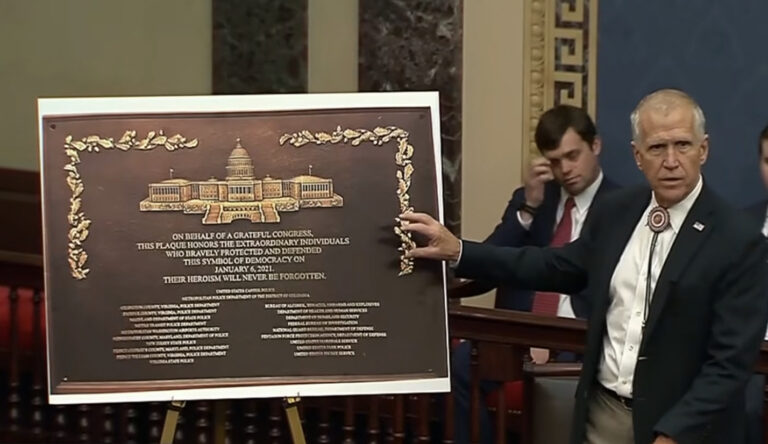
Democrats Target Jan. 6 Memorial Plaque



Trump Cabinet Official Faces IMPEACHMENT Vote


Share your perspective and reply to other readers.
Free account required. You will stay on this page.