
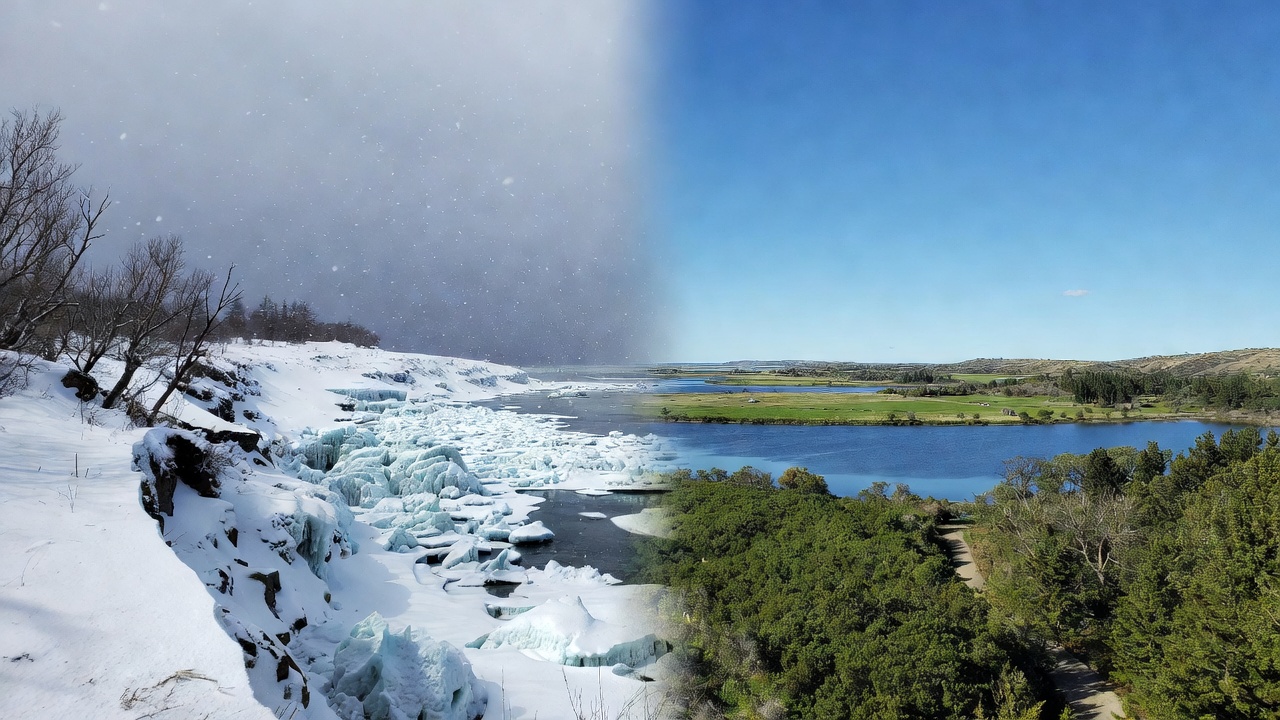
In recent weeks, the United States has experienced a stark contrast in weather conditions, splitting the country into two distinct zones. While the eastern regions have endured persistent cold snaps, complete with snow and icy conditions extending as far south as Florida, the western parts have basked in unusually warm temperatures and seen minimal snowfall. This unusual setup is poised for a transformation, though not before one final surge of Arctic chill hits the East over the weekend.
The divide has grown more pronounced lately. In the West, temperatures have soared 20 to 30 degrees above typical levels, mimicking late spring rather than mid-winter. For instance, Great Falls in Montana is on track for a historic streak, with highs surpassing 60 degrees Fahrenheit for five consecutive days this February – a new benchmark for the month. Meanwhile, Los Angeles shattered records on Wednesday by hitting 88 degrees, warmer than the city’s average peaks during the summer months of July and August.
This extreme split stems from the jet stream’s unusual configuration, which has remained locked in place for an extended period. In the East, cities like Washington, D.C., have logged some of their longest continuous periods below freezing, with one recent stretch from late January to early February ranking as the sixth-longest on record. Similar prolonged cold spells have appeared in the top 20 for many other eastern locations.
Weather maps highlight the dramatic differences: at times, places like Juneau, Alaska, have been warmer than areas in central Florida. The West’s warmth and dryness result from a stubborn high-pressure ridge in the jet stream, diverting storms and cold air northward. In contrast, a deep low-pressure trough downstream has funneled repeated waves of Arctic air into the East, fostering ideal setups for intense winter storms.
Snowfall totals tell a similar story of imbalance. During January, locations in the Carolinas and even Atlanta accumulated more snow than Salt Lake City, which only saw a mere 0.1 inches – well below its monthly average of 12.7 inches.
For those weary of the East’s ongoing freeze or the West’s unseasonable dryness, relief is approaching. Forecasts indicate the western high-pressure ridge will weaken, allowing weather patterns to evolve. This shift should bring milder conditions eastward and open the door for Pacific storms to deliver much-needed precipitation to the West.
However, the transition won’t be immediate. This weekend into early next week, the Northeast and Mid-Atlantic will face the season’s most severe cold yet, with temperatures dipping into the single digits and wind chills plummeting to double digits below zero. Around 50 locations could tie or break cold records during this outbreak.
It’s worth noting that winter is the season warming most rapidly across the U.S., making cold records increasingly uncommon, especially all-time or monthly lows. Recent data underscores this trend: while cold records outnumbered warm ones by more than 2-to-1 during the late January to early February Arctic surge in the contiguous U.S., the overall picture for 2026 shows warm records occurring about 1.5 times more frequently than cold ones since the start of the year. In a warming climate, this imbalance favoring heat records continues to grow.
Experts attribute part of the East’s prolonged cold to the Arctic Oscillation, a large-scale atmospheric pattern reflecting pressure variations between the Arctic and mid-latitudes. According to Laura Ciasto, an atmospheric scientist at NOAA’s Climate Prediction Center, a negative phase of the Arctic Oscillation promotes a wavier jet stream, enabling cold Arctic air to spill southward over the U.S. This negative phase has persisted for over a month – longer than typical – suggesting influences from other regions, such as the tropical Pacific, may be sustaining it.
As the weather pattern evolves, both coasts can anticipate more balanced conditions in the coming weeks, marking the end of this notable national divide.