Democrat’s Criminal Case Takes MAJOR Turn
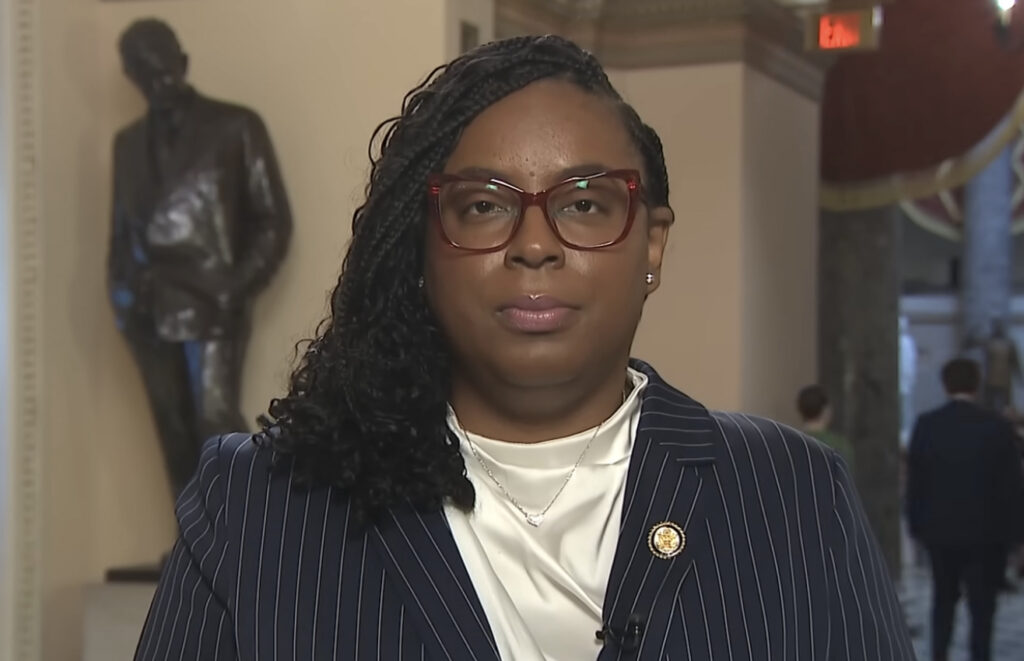
A federal appeals court rejected Rep. LaMonica McIver’s request to reconsider a ruling that allows criminal charges against her to proceed. The 3rd U.S. Circuit Court of Appeals left in place an August decision finding that congressional immunity does not shield her from prosecution on at least two of three charges. McIver, a New Jersey Democrat and progressive caucus member, faces allegations stemming from a May 2025 confrontation at an immigration detention facility in Newark. The case involves claims that she physically interfered with federal officers.
- 🚨 Top Story: Obama Makes Surprise Move After Midterms
- Most Viewed: World Champion Arrested by ICE
- Most Commented: Iran Reportedly Prepared Dirty Bomb in DC
- 🔥Photos: Country Star Ella Langley Makes History
McIver called the outcome disappointing and accused the Justice Department of political targeting. “Donald Trump continues to send warning shots to Democrats in Congress and in all levels of power — but their case against me right now, in broad daylight, goes well beyond a warning,” she said. “Because of a weaponized Department of Justice and because I dared to do my job and conduct oversight of ICE, I am facing 17 years in prison.” She added that the decision moves the country closer to a situation in which a president can try to imprison people for their political stands.
The charges arise from a May 9, 2025, unannounced visit by Democratic officials to the Delaney Hall facility. The visit turned into a confrontation that also led to the arrest of Newark Mayor Ras Baraka. Prosecutors allege McIver slammed her forearm into an officer attempting to arrest Baraka and struck another officer with both forearms while trying to re-enter a secured area. McIver has maintained that her actions were protected legislative oversight. A divided three-judge panel rejected that argument for two counts in August.
Judge Cindy Chung, a Biden appointee, joined Trump-appointed Judge Stephanos Bibas in the majority. They concluded that physically interfering with officers was not protected legislative activity. “Like the acts charged in Count One, the acts of pushing past and forcibly striking someone are unambiguously non-legislative: they are not integral to the legislative process,” the judges wrote. They found no cognizable connection between the alleged intervention in Baraka’s arrest and any shielded legislative function. The third count was returned to a lower court for further consideration.
Judge Thomas Ambro dissented, warning that the ruling could hinder lawmakers’ ability to inspect executive facilities. “When an Executive Branch official prevents a Member from entering a DHS facility, she is denied effective access to an oversight inspection,” he wrote. Thursday’s order leaves the August ruling in place. McIver and her attorneys said they are examining every possible option, including a potential Supreme Court appeal. The justices would have to agree to hear the case. The decision preserves the administration’s ability to pursue the charges.
The confrontation occurred during an attempt to conduct oversight of the detention facility. Federal officers were present to manage the unannounced visit. Prosecutors charged McIver with three counts related to assault and obstruction of federal officers. Two of those counts can now proceed under the appeals court’s decision. McIver has described the prosecution as retaliation for performing congressional duties. The majority opinion drew a line between legitimate oversight and the physical conduct alleged in the indictment. That distinction is central to the case.
The August panel decision allowed two counts to move forward while sending the third back for additional review. Thursday’s refusal to rehear the case solidifies that outcome. McIver faces a potential maximum of 17 years if convicted on the most serious charges. She has not been tried. The constitutional question centers on the scope of the Speech or Debate Clause. The majority held that the alleged physical acts fell outside its protection. Ambro’s dissent focused on the practical effect on oversight access. The full appeals court declined to revisit the panel’s conclusion.
McIver’s statement framed the ruling as part of a broader pattern of targeting Democratic lawmakers. She linked the case to her decision to conduct oversight of ICE operations. The May 2025 incident involved multiple elected officials. Baraka’s arrest was part of the same event. Prosecutors focused on McIver’s alleged physical contact with officers. The appeals court majority treated those actions as distinct from legislative activity. The dissent argued that blocking entry itself interferes with oversight. The current ruling favors the prosecution’s position on the immunity question.
The case remains at the trial-court level for the counts that can proceed. McIver could still seek Supreme Court review. The justices accept only a small percentage of petitions. The administration has treated the charges as a straightforward application of criminal law to alleged interference with officers. McIver’s defense has centered on constitutional protections for congressional oversight. The appeals court has now twice declined to block the prosecution on those grounds. The August panel and the Thursday order both rejected the immunity claim for two counts.
The Delaney Hall visit was not coordinated in advance with facility officials. That lack of notice contributed to the chaotic scene. Officers moved to arrest Baraka during the confrontation. McIver’s alleged actions occurred in that context. The indictment describes specific physical contact. The appeals court found those acts were not integral to the legislative process. Oversight authority does not automatically immunize every action taken during a visit, according to the majority. Ambro disagreed on the access question. The current posture leaves the charges intact.
McIver has said she and her legal team are reviewing next steps. A Supreme Court petition remains possible. The trial court will handle the counts that survived the immunity challenge. The third count requires further proceedings below. The maximum exposure cited by McIver assumes conviction on the most serious charges. No trial date has been set in the reporting. The constitutional issue has been the primary focus of the appeals. The factual allegations will be tested if the case reaches trial. The appeals court has cleared the path for that process on two counts.
The ruling is the latest in a series of legal developments involving Democratic lawmakers and immigration enforcement. McIver’s case centers on the specific allegations from the Newark facility. The majority opinion emphasized the non-legislative character of the alleged physical acts.
The dissent highlighted the potential impact on future oversight. Thursday’s order ends the rehearing request at the circuit level. Further review would require Supreme Court action. The prosecution can continue on the counts that survived. McIver maintains the charges are politically motivated.
The May 2025 incident remains the factual core of the case. Multiple officials were present. The confrontation escalated. Prosecutors charged McIver based on alleged contact with officers. The appeals court has determined that those allegations are not shielded by congressional immunity for two counts.
The third count is still under review at the district level. McIver’s public statements have focused on the broader implications. The legal question before the courts has been narrower. The current ruling favors allowing the case to proceed.
The 3rd Circuit’s decision leaves the August panel opinion in place. Two counts can move forward. The immunity defense has been rejected for those charges at the appellate level. McIver can still pursue Supreme Court review. The trial court retains jurisdiction over the surviving counts.
The factual disputes will be resolved through the normal criminal process if the case is not otherwise resolved. The constitutional argument has been the central focus of the appeals. That argument has not succeeded so far on two of the three counts.
The case now returns to the district court for the counts that survived. McIver faces the possibility of trial on those charges. The maximum penalty cited is 17 years. That figure assumes conviction and consecutive sentencing on the most serious counts. No such outcome is certain.
The appeals court has addressed the immunity question. The remaining issues are factual and procedural. McIver continues to describe the prosecution as retaliation for oversight. The courts have so far allowed the charges to proceed on two counts.
Join the Conversation
Keep Reading
Netflix Actor Found Dead at 38
Trump’s Unprecedented Moment on World Stage
Next House Speaker Revealed

Paris Hilton Teams Up With AOC
Fox Host Reveals Why His Family Is Stockpiling Supplies

Gas Prices Crash to Low Point


Trump Announces Historic Breakthrough


Share your perspective and reply to other readers.
Free account required. You will stay on this page.