
Democrat Rep. Suffers Brutal Ruling on Criminal Charges
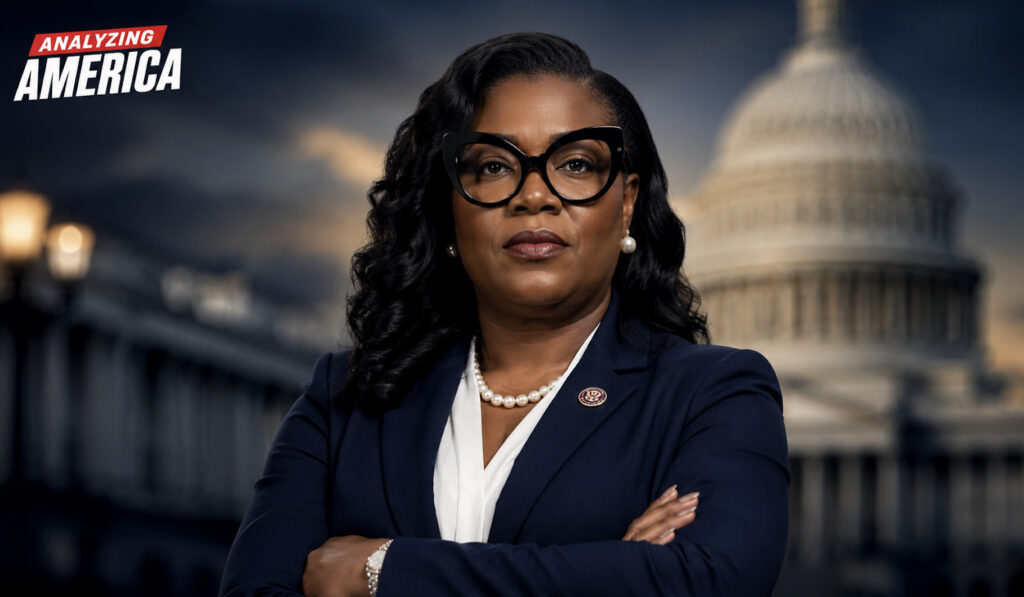
A federal appeals court has ruled that two criminal charges against Rep. LaMonica McIver, D-N.J., may proceed in connection with a confrontation involving federal immigration officers in Newark. A three-judge panel of the U.S. Court of Appeals for the Third Circuit ruled 2-1 that McIver cannot use constitutional protections for members of Congress to block prosecution over the specific physical conduct alleged in the case.
McIver was charged in June 2025 following an incident outside Delaney Hall, an immigration detention facility used by U.S. Immigration and Customs Enforcement. McIver argued that she was at the facility as part of an authorized congressional oversight visit and that her actions were protected by the Constitution’s Speech or Debate Clause.
🚨 BREAKING: A federal appeals court has REJECTED Democrat Rep. LaMonica McIver's immunity defense after she ASSAULTED ICE agents in Newark, 2-1
FAFO!🔥
Video shows McIver, in a red jacket, committing FEDERAL FELONIES by striking MULTIPLE ICE agents during a fit of entitled… pic.twitter.com/TZo5ELQ4Tt
— Nick Sortor (@nicksortor) August 26, 2026
That provision generally shields lawmakers from being questioned in court over legitimate legislative activities, including congressional investigations and oversight. The appeals court disagreed when it came to the physical actions described in the first two charges. Judge Cindy Chung, joined by Judge Stephanos Bibas, described the conduct alleged in Counts One and Two as “unambiguously non-legislative.”
Prosecutors allege McIver struck or made forceful contact with federal officers during the confrontation. The indictment claims she slammed her forearm into one agent and grabbed him while officers were arresting Newark Mayor Ras Baraka. McIver was also accused of using her forearms against another officer while attempting to move back into a secured area of the facility.
The court determined that those alleged actions “are not integral to the legislative process” and therefore are not automatically protected simply because McIver was participating in congressional oversight at the time.
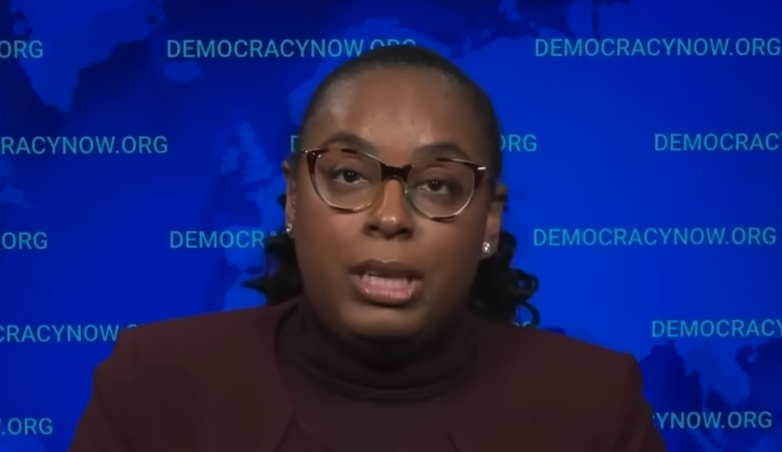
“Count One neither charges Congresswoman McIver for an act that is legislative in nature nor requires that she answer for any legislative act,” Chung wrote.
The panel also rejected McIver’s argument that legal precedents involving presidential immunity should be used to broaden constitutional protections available to members of Congress. However, the appeals court reached a different conclusion regarding Count Three, which broadly alleges that McIver interfered with federal officers.
The panel sent that charge back to the district court for additional review because it does not identify one specific act. The trial judge must determine whether the count potentially includes protected congressional activity and whether any protected conduct can be separated from the remaining allegations. McIver also raised claims of selective and vindictive prosecution, but the appeals court dismissed those arguments at this stage of the proceedings for lack of jurisdiction.
Judge Thomas Ambro partially dissented from the majority opinion. He argued that the conduct described in Count Two could potentially be viewed as incidental contact while McIver was attempting to continue the congressional inspection.
The confrontation began when McIver arrived at Delaney Hall with fellow Democratic Reps. Rob Menendez and Bonnie Watson Coleman for an unannounced inspection. McIver is a member of the House Homeland Security Committee. Baraka later arrived at the facility and was denied entry. Federal officers eventually arrested him outside the secured area, although the charge against the mayor was later dropped.
According to McIver’s June 10, 2025, indictment, she positioned herself between Baraka and a Homeland Security Investigations agent during the arrest and allegedly made forceful contact with the officer.
Prosecutors further allege that after Baraka’s arrest, McIver attempted to return to the secured area and pushed past an ICE deportation officer while striking him with her forearms.
McIver faces three counts under a federal law prohibiting the forcible assault, resistance, obstruction or interference with federal officers performing their duties.
Counts One and Two are felony charges carrying potential maximum sentences of eight years each. Count Three is a misdemeanor carrying a maximum sentence of one year. McIver has pleaded not guilty to the charges.
Join the Conversation
Keep Reading
Lionel Richie Rushed to ICU After Onstage Scare
CNN Admits It Got Trump Story Very Wrong
New Prison Photos of Maduro Raise Eyebrows
Share your perspective and reply to other readers.
Free account required. You will stay on this page.