
Toxic Fallout Fears Emerge After Massive US Army Detonation
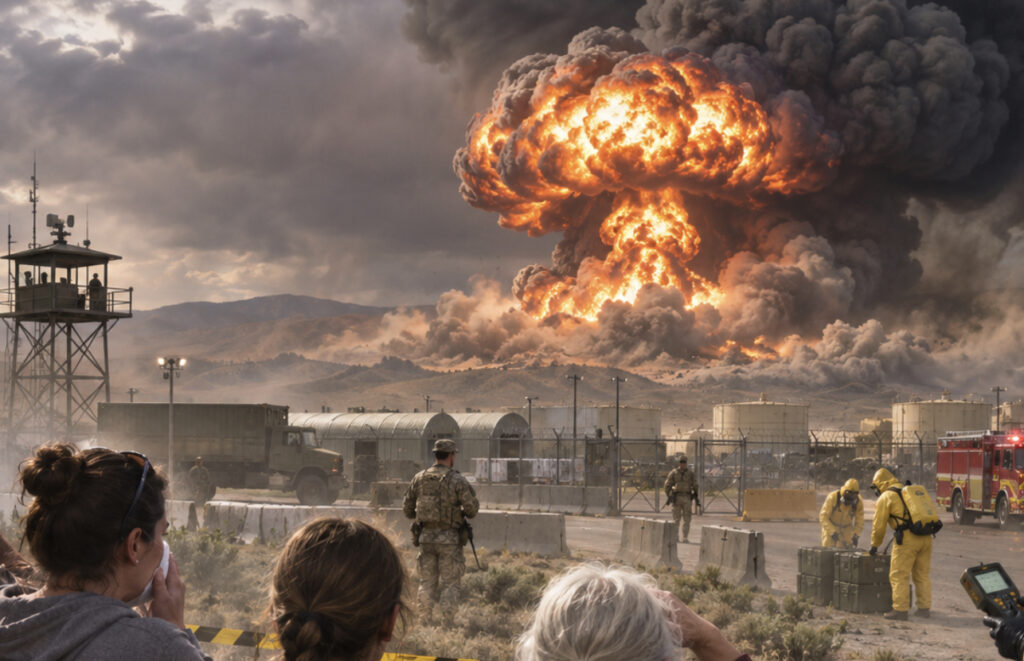
The U.S. Army carried out a controlled detonation of nearly 10,000 pounds of unstable lead azide at the Iowa Army Ammunition Plant near Middletown on Wednesday morning. The operation sent visible plumes into the sky and immediately raised concerns about whether toxic lead particles escaped the site and drifted into surrounding communities.
Officials timed the blast for approximately 9 a.m. Central time after determining that the deteriorating chemical stockpile had become too unstable to leave in storage. Residents living miles away reported hearing the explosion and feeling its shock wave as two separate detonations rocked the facility.
Federal authorities are now investigating whether hazardous lead dust traveled beyond the military property. The Army had warned for days that the material could detonate on its own if not destroyed under controlled conditions.
Teams used C-4 explosives, specialized charges, and diesel fuel placed inside two reinforced concrete bunkers covered with earth. The design aimed to direct much of the force downward while ensuring complete destruction of the 68 barrels.
Despite those precautions, a visible plume rose immediately after the blast. A reporter positioned north of the site described feeling the percussion and seeing two distinct clouds form.
Residents in New London, about 10 miles from the plant, heard the explosion clearly. Environmental monitoring teams are working to determine whether contamination occurred and how far any airborne particles may have traveled.
Army modeling suggested prevailing winds could carry dust southwest, with projections extending into Missouri. Officials tracked the expected movement of the plume through the early afternoon.
Before the detonation, residents in Middletown and a designated five-mile zone southwest of the plant were urged to evacuate temporarily. Those outside the zone were advised to remain indoors for up to 48 hours.
Emergency alerts went out roughly one hour before the blast, telling remaining residents in Middletown to shelter in place. Some families may spend part of the Thanksgiving holiday inside while authorities assess potential hazards.
Not everyone near the site experienced the same intensity. One local journalist described the blasts as less powerful than expected, more like distant gunfire than a massive explosion.
Another resident noted surprise that the force appeared relatively contained given the amount of material involved. Early reports indicated no immediate structural damage to nearby communities.
EPA Administrator Lee Zeldin offered a preliminary assessment that the Army’s protective measures had exceeded expectations. Full environmental testing results were still pending at the time of his comments.
NASA is monitoring the plume with satellite imagery while specialists examine whether hazardous particles spread beyond the installation. Army teams planned to send small drones into the bunkers to confirm that all barrels were destroyed.
The central unanswered question remains whether the effort to eliminate a dangerous stockpile also released toxic lead into the surrounding environment. Ongoing monitoring will determine the answer for Iowa residents near the plant.
The operation resolved an immediate safety risk posed by the unstable chemicals. Environmental results will shape any further public guidance in the days ahead.
Local communities continue to wait for definitive testing data. The detonation itself appears to have avoided widespread physical damage.
Join the Conversation
Keep Reading



Fox Host Charles Payne Reveals Details of Personal Tragedy

How Trump Spends Each Thanksgiving


Trump Issues Major Warning to Russia


Charlie Sheen Makes Disturbing Confession


Tim Walz Faces Growing Backlash

Judge Issues Major Ruling on ABC News

Share your perspective and reply to other readers.
Free account required. You will stay on this page.