
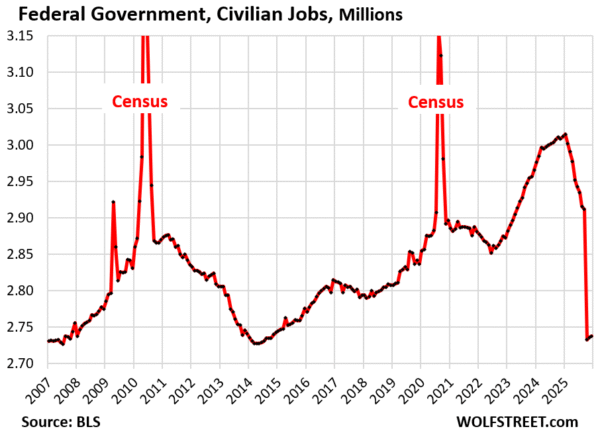
In a significant achievement for advocates of smaller government, U.S. federal employment has dropped to its lowest point since 1966, according to the latest data from the Bureau of Labor Statistics. This decline, driven by President Donald Trump’s policies aimed at reducing bureaucracy, marks a pivotal shift in the size of the federal government.
As of January 2026, federal government employment stands at approximately 2.7 million workers, down from a peak of over 3 million in recent years. The month saw a further reduction of 34,000 federal jobs, continuing a trend that has seen a total decrease of 327,000 positions—or 10.9%—since the peak in October 2024. This absolute number is the smallest federal workforce in nearly six decades, reflecting efforts to streamline operations and cut unnecessary spending.
Moreover, when measured as a share of the total U.S. workforce, federal employment has hit the lowest level in recorded history. With the overall economy adding 130,000 jobs in January and the unemployment rate dipping to 4.3%, the private sector continues to thrive while government bloat is addressed.
The Trend Over Recent Years
The reduction didn’t happen overnight. During the Biden administration, federal employment ballooned, reaching highs not seen in years due to expanded programs and hiring. However, upon President Trump’s return to office, initiatives like the Department of Government Efficiency (DOGE) have aggressively targeted redundancies.
Here’s a summary of federal employment trends based on BLS data:
| Year (January) | Approximate Federal Employees (Millions) |
|---|---|
| 2021 | 2.9 |
| 2022 | 2.85 |
| 2023 | 2.9 |
| 2024 | 3.0 |
| 2025 | 3.05 |
| 2026 | 2.7 |
This sharp drop in 2025 and 2026 aligns with conservative goals of fiscal responsibility, allowing more resources to flow to the private sector where innovation and job creation flourish.
Implications for Taxpayers and the Economy
For young conservatives, this is a win for limited government. Reducing the federal payroll not only saves taxpayer dollars but also minimizes regulatory overreach that can stifle business growth. As U.S. Secretary of Labor Lori Chavez-DeRemer noted in her statement on the January jobs report, “President Trump is fulfilling his promise to grow the private sector while eliminating wasteful and burdensome bureaucracy.”
While some critics argue that these cuts could lead to service delays, the data shows robust private-sector gains in areas like construction and health care, offsetting any potential gaps. This approach echoes the principles of fiscal conservatism, proving that a leaner government can support a stronger economy.
For more details, check the full BLS Employment Situation Report or the Department of Labor’s statement.
💬 Join the conversation
You must be registered and logged in to comment.
Log in or Create an account