New Assault Accusations Against Trump?
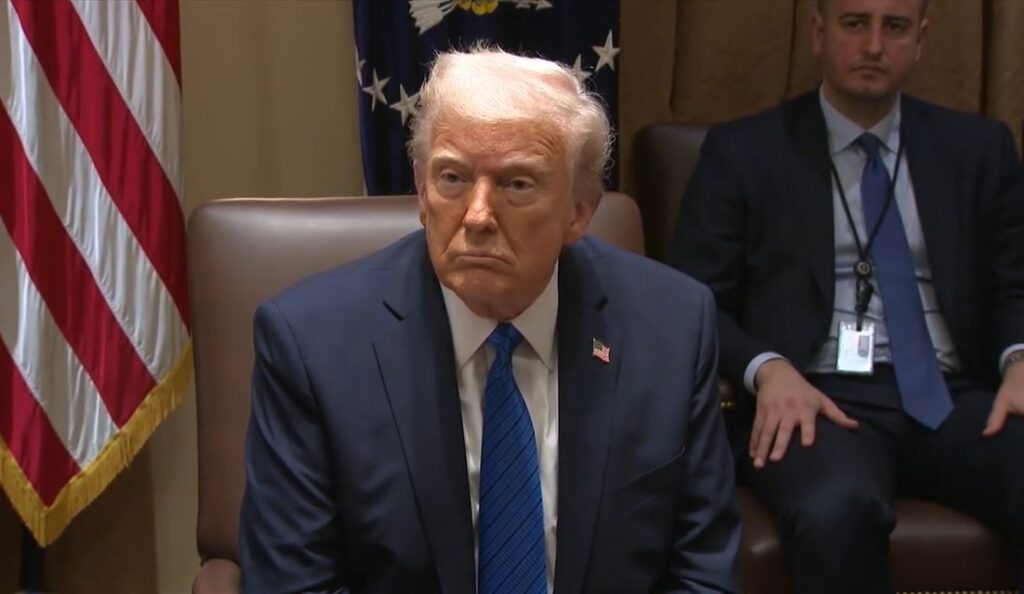
This all sounds fake and lame. WATCH:
Background Info: A viral video featuring a New York psychologist accusing President Donald Trump of sexual abuse has generated controversy just ahead of the November 3, 2026, midterm elections. The recording, which began circulating widely over the weekend, features a woman identifying herself as Dr. Larissa Portnoff making serious allegations about experiences she claims occurred during her childhood. The accusations remain unverified, but the video’s appearance immediately before a major national election has attracted attention and raised questions about its timing.
Portnoff, identified in published reports as a clinical psychologist based in New York, alleges that Trump sexually abused her beginning when she was approximately eight years old. She claims the alleged misconduct intensified when she was around ten and continued until approximately age twelve. She further alleges that she experienced additional inappropriate conduct during her teenage years and intimidation later in adulthood. No independently verified evidence establishing these specific allegations has been publicly identified in the reporting reviewed.
The video emerged during the final days of a contentious midterm campaign, when Republicans and Democrats were making their closing arguments to voters. Its circulation so close to Election Day has prompted discussion about whether the timing was deliberate, coincidental, or connected to Portnoff’s own stated desire to speak publicly. At present, there is no verified evidence demonstrating that the video’s release was coordinated by a political campaign or organization.
According to reports published November 2, Portnoff discusses her allegations directly in the recording, describing experiences she says affected her for decades. She also claims to have faced efforts to discourage her from speaking publicly. Those statements have not been independently corroborated, and the available reporting does not establish whether the alleged encounters or intimidation occurred as described.
One particularly significant aspect of the video is Portnoff’s decision to publicly identify herself. Unlike anonymous accusations that sometimes circulate online, the recording features a person making allegations under a specific name. However, establishing an accuser’s identity or professional background is separate from establishing the accuracy of the allegations. Independent documentation, corroborating testimony, and other evidence remain essential to assessing the claims.
Portnoff also alleges that individuals connected to Trump’s political circle attempted to influence her willingness to speak publicly. In her account, she describes an alleged invitation to a private meeting at New York’s Waldorf Astoria hotel in September 2025. She presents the encounter as part of a broader pattern of intimidation, although the circumstances surrounding the alleged invitation have not been independently verified.
Additional assertions in the video concern supposedly confidential records and communications with government officials. Portnoff claims that sensitive information about her was accessed and that she sought assistance through official channels. Public reporting has not established that the claimed access occurred or confirmed the full nature of any communications with federal authorities.
The allegations arrive against the backdrop of years of controversy surrounding Trump’s personal conduct and previous accusations of sexual misconduct. Trump has denied allegations of sexual wrongdoing, and the legal outcomes of earlier cases differ substantially from the unverified claims now circulating online. Those distinctions are important when evaluating a new accusation independently of past controversies.
One prominent earlier case involved writer E. Jean Carroll, who accused Trump of sexually assaulting her in a New York department store during the 1990s. In 2023, a federal civil jury found Trump liable for sexually abusing Carroll and defaming her, awarding $5 million in damages. A separate jury subsequently awarded Carroll $83.3 million in a defamation case. Trump disputed Carroll’s account, and the findings were made under the civil standard of proof rather than through a criminal conviction.
Those civil verdicts represent established judicial findings in Carroll’s particular cases. They do not, however, verify allegations made by other individuals. Each accusation must be evaluated according to its own evidence, chronology, witnesses, and supporting documentation. Treating separate accusations as automatically proven because of an earlier verdict would overlook a fundamental distinction in legal and investigative reporting.
Trump’s past association with Jeffrey Epstein has also remained a subject of public scrutiny. Epstein, a wealthy financier accused of operating a sexual exploitation network involving underage girls, died in federal custody in 2019 while awaiting trial on sex-trafficking charges. Documents and investigative records relating to Epstein have continued to generate political controversy, particularly concerning the identities of people who associated with him and the handling of evidence collected by authorities.
Earlier in 2026, the Justice Department faced questions about records connected to an unidentified woman who had accused Trump of sexual misconduct. Additional Epstein-related interview materials were subsequently released after officials acknowledged that some documents had been incorrectly excluded from a previous publication. Those allegations were described as uncorroborated, and there is no established evidence in the reporting reviewed that Portnoff is the same individual referenced in those records.
The proximity of Portnoff’s video to Election Day is likely to be among the most heavily discussed aspects of the controversy. Political accusations released shortly before voting can attract substantial attention because campaigns have limited time to investigate, respond, or contextualize new information. This dynamic has repeatedly influenced debates about media coverage, political opposition research, and the responsibilities of journalists during election season.
Nevertheless, timing alone cannot establish the motivation behind a public accusation. Individuals may choose to disclose personal allegations for numerous reasons, including developments in their own circumstances, concerns about public accountability, or a belief that a particular moment will make their statements more likely to be heard. Determining whether outside political organizations participated in a release would require evidence beyond the date on which a recording became widely available.
Social media has significantly accelerated the circulation of politically sensitive allegations. A recording posted by an individual can quickly spread across multiple platforms, reaching audiences far beyond the original account. As users repost short excerpts, add commentary, and frame the allegations through their own political perspectives, important qualifications can disappear. The result is an environment in which public awareness may grow much faster than independent verification.
For journalists, the controversy presents competing responsibilities. Allegations involving a sitting president and potential criminal misconduct are inherently newsworthy, particularly when an individual makes them publicly. At the same time, responsible coverage requires distinguishing the fact that an accusation was made from evidence that the underlying conduct occurred. It also requires examining whether the recording is authentic, whether supporting records exist, and whether the accused has been offered an opportunity to respond.
The political implications remain uncertain. Some voters may regard the recording as another reason to scrutinize Trump’s conduct, while others may question its appearance immediately before an election or demand additional corroboration before drawing conclusions. There is currently insufficient evidence to determine whether the video will materially influence voting behavior, and its popularity online should not be confused with a measurable change in electoral support.
Ultimately, the controversy surrounding Dr. Larissa Portnoff’s video raises questions about accountability, evidence, political timing, and the influence of social media on national elections. Her allegations are serious and warrant careful examination, but their accuracy has not been established by the available reporting. As Americans head to the polls, the central issue is whether additional documentation, credible witnesses, official findings, or responses will emerge to clarify the allegations and circumstances surrounding the recording’s release.
Join the Conversation
Keep Reading
Democratic Party Leader Self-Deports
Jennifer Lopez Makes Stunning Hollywood Claim
Gavin Newsom Hit With Major Lawsuit
Trump Issues Chilling Warning to Iran
FBI’s Most Wanted Cartel Leader Captured
Melania Trump Makes Emotional Public Statement
Share your perspective and reply to other readers.
Free account required. You will stay on this page.