
Why Republicans Lost Last Night
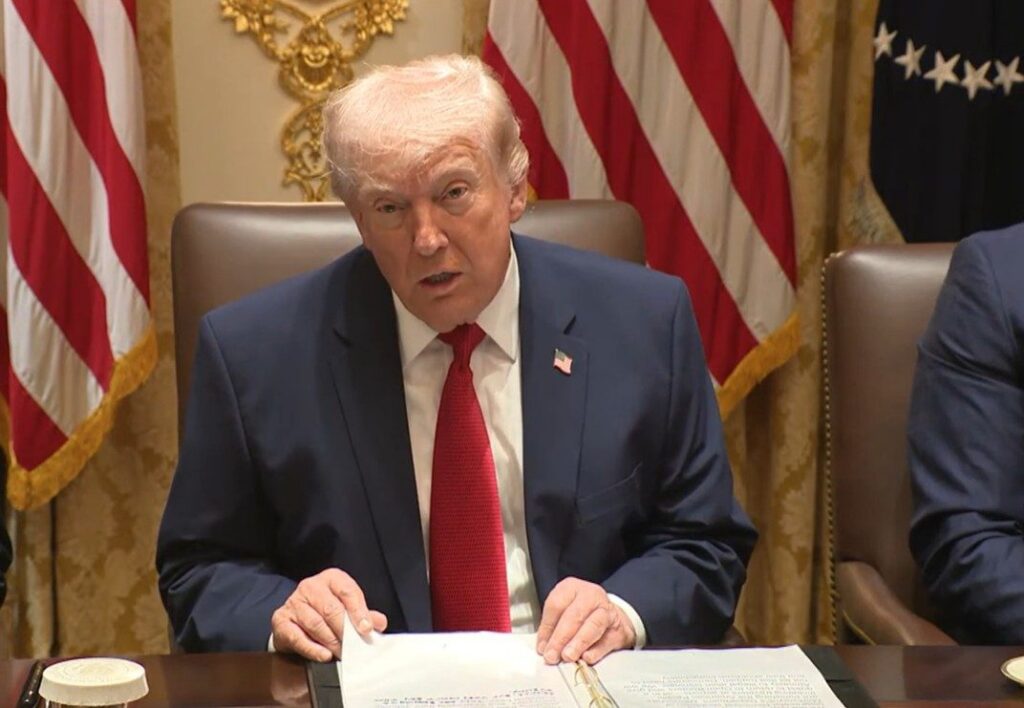
Republicans lost the election last night. This is why. WATCH:
Background Info: Republicans suffered major defeats in Tuesday’s midterm elections, losing control of both chambers of Congress as Democrats captured several traditionally Republican states and flipped key governorships. The November 3 results represented a significant political setback for President Donald Trump, whose second administration faced growing voter dissatisfaction over the economy, cost of living, tariffs and the ongoing war with Iran.
Democrats secured majorities in the U.S. House of Representatives and Senate, reversing Republican control of Washington less than two years after Trump returned to the White House. Democrats gained at least seven Senate seats and 18 House seats, with additional races still being finalized early Wednesday. The outcome gives Democrats substantial power to challenge the president’s legislative agenda, conduct congressional investigations and block major Republican proposals.
Some of the most surprising results came from states that have historically favored Republicans. Democrats captured Senate seats in Texas, Kansas, Iowa, South Carolina, North Carolina, Ohio and Maine. The victories demonstrated that Republican losses extended well beyond traditional battleground states and suggested that dissatisfaction with the administration had reached portions of the electorate previously considered reliably conservative.
In Texas, Democrat James Talarico defeated Republican Ken Paxton in the U.S. Senate race, delivering a historic victory for a party that had struggled to win statewide elections for more than three decades. Democrat Gina Hinojosa also defeated Republican Gov. Greg Abbott, marking an extraordinary reversal in a state that had served as a cornerstone of Republican political power.
Republicans experienced additional setbacks in Ohio, where Democrat Sherrod Brown defeated Republican Sen. Jon Husted, while Democrat Amy Acton won the governor’s race against Vivek Ramaswamy. In North Carolina, former Democratic Gov. Roy Cooper defeated Republican Michael Whatley for an open Senate seat. Meanwhile, Democrats registered unexpected Senate victories in Kansas, Iowa and South Carolina, underscoring the magnitude of the national shift.
Democrats also captured governorships in Georgia and Iowa while retaining several important offices in competitive states. Former Atlanta Mayor Keisha Lance Bottoms won Georgia’s gubernatorial election, while Democrat Rob Sand prevailed in Iowa. However, Republicans maintained control of Florida’s governor’s office, where Rep. Byron Donalds won the race to succeed Ron DeSantis, demonstrating that the Democratic wave was not uniform across the country.
Economic dissatisfaction appeared to play a central role in the election results. According to an October AP-NORC survey, 85% of voters identified the economy as one of the most important issues influencing their decisions, while 84% said the same about the cost of living. Healthcare ranked among the most important concerns for 69% of respondents, followed by the war with Iran at 64%. Those findings suggested that household finances and international instability were dominating voter priorities in the weeks before Election Day.
Election Day exit polling reinforced those concerns. CBS News found that voters were more than twice as likely to report that their personal financial situations had deteriorated rather than improved. Americans expressed widespread frustration over grocery prices, gasoline, utilities and other everyday expenses. Although the administration had promoted its economic policies as beneficial to American workers, many voters indicated that they had not experienced meaningful financial relief.
Trump’s approval ratings also presented a serious obstacle for Republican candidates. CBS News exit polling placed his approval rating at approximately 38%, while an October AP-NORC survey found that 36% approved of his overall job performance. In that earlier survey, 74% disapproved of his handling of the economy, and 79% disapproved of his approach to the cost of living. Those numbers suggested that economic dissatisfaction had become a significant political liability for the White House.
Trade policy and tariffs also emerged as potential contributors to Republican losses. Trump had defended tariffs as necessary to protect American industries and strengthen domestic manufacturing, but critics argued that import taxes increased costs for businesses and consumers. The extent to which tariffs independently influenced individual races remains uncertain, although broader concerns about affordability clearly weighed on voters across the political spectrum.
The administration’s military conflict with Iran represented another major source of voter frustration. Gallup polling conducted before the election identified the situation in Iran as one of the country’s leading concerns, with 47% of registered voters describing it as extremely important to their vote. Election Day surveys also found substantial opposition to the decision to launch military action, including disagreement among some Republican voters. Concerns about the conflict extended beyond foreign policy to gasoline prices and economic stability.
Immigration remained an important issue, particularly among Republican voters, but it did not outweigh economic concerns across the broader electorate. Exit polling indicated that Republican supporters placed significant emphasis on immigration enforcement, while Democratic voters were more likely to prioritize concerns about democracy and opposition to Trump. The contrasting priorities reflected a deeply divided electorate, with voters approaching the midterms through substantially different political concerns.
Another striking finding involved dissatisfaction with the political system itself. The AP-NORC survey found that approximately eight in ten voters believed the country needed substantial changes or a complete overhaul in how it was governed. Only about one in ten expressed optimism about American politics. Those results suggested that the election reflected a widespread demand for change extending beyond individual candidates or disagreements over specific policies.
Conservative commentator Joseph Backholm offered a critical assessment of the Republican defeats in a widely circulated Election Night post. Backholm argued that Trump, tariffs and Iran appeared particularly relevant to the outcome. He also suggested that voters were delivering a rejection of the president rather than embracing the Democratic Party’s broader ideological agenda. His interpretation reflected a debate emerging among conservatives over whether Republicans had lost because of their policy priorities, Trump’s leadership style or dissatisfaction with the administration’s performance.
Backholm further argued that Trump had played an important role in challenging progressive political movements but questioned whether his leadership offered a sufficiently compelling long-term vision for the country. He suggested that Republicans would eventually need a more aspirational political message capable of appealing beyond their existing supporters. The argument highlighted a potential challenge for the party as it begins considering its political direction after Trump’s presidency.
However, the Democratic victories should not automatically be interpreted as universal public support for every progressive policy proposal. Election results can reflect dissatisfaction with an incumbent administration, economic anxiety or a preference for divided government rather than comprehensive agreement with the opposition party. While Democrats secured a decisive political advantage, the extent to which voters endorsed specific Democratic positions on immigration, taxation, cultural issues and government spending remains a separate question.
The results also raise important questions about the Republican Party’s future leadership. With Trump constitutionally barred from seeking another elected presidential term, attention is expected to shift toward potential 2028 contenders, including Vice President JD Vance, Secretary of State Marco Rubio and Florida Gov. Ron DeSantis. Conservative discussions following the election have already emphasized the need to combine the party’s policy priorities with a broader message focused on affordability, stability and national optimism.
Ultimately, the 2026 midterms delivered a substantial rebuke to Republicans and demonstrated the political consequences of persistent economic dissatisfaction, unpopular foreign policy decisions and declining presidential approval. Democrats will enter the next Congress with significant leverage over the Trump administration, while Republicans face difficult questions about their leadership and electoral strategy. Whether the outcome signals a lasting ideological realignment or a temporary rejection of the party in power will become clearer as both parties prepare for the 2028 presidential election.
Join the Conversation
Keep Reading
FBI’s Most Wanted Cartel Leader Captured
Melania Trump Makes Emotional Public Statement

AOC’s Luxury Spending EXPOSED

Bombshell Report on Somali Democrat Married To Illegal Immigrant
Trump Responds to Elon Musk’s Anti-MAGA Remark
Share your perspective and reply to other readers.
Free account required. You will stay on this page.